


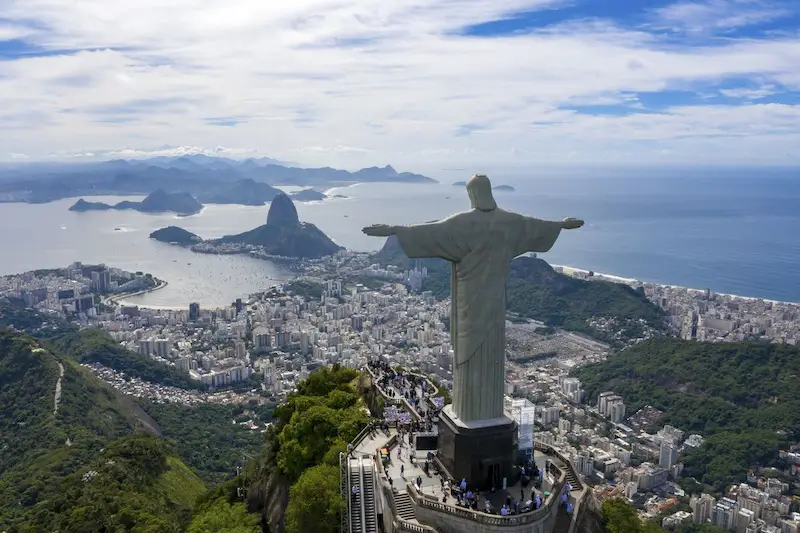


Rio de Janeiro is taking significant steps to enhance surveillance and security measures in preparation for next year's Group of 20 (G-20) summit. The city aims to address the long-standing public security concerns that have plagued Rio by leveraging this major global gathering. As part of these efforts, officials plan to more than double the number of cameras connected to an operations hub, increasing the total to 10,000 by the time world leaders convene in late 2022. By emphasizing security, Rio aims to seize the opportunity offered by Brazil's G-20 presidency and restore its reputation as a host for prominent events. Mayor Eduardo Paes envisions capitalizing on the spotlight, similar to when Rio hosted the 2016 Olympics, to attract much-needed investment and contribute to the city's recovery from both the pandemic and pre-existing economic challenges.
Despite the ambitious security plans, organizers face a significant challenge as they prepare to welcome presidents and heads of state from the world's largest economies. Homicide rates in Rio have been on the rise again after a period of decline. Recent high-profile killings have drawn attention to the city's persistently violent crime issues. While Rio has previously managed large-scale events without major security incidents, it has struggled to translate these occasions into lasting improvements in public safety for its residents.
The summit's main event will attract leaders to Rio, with organizers proposing multiple potential venues in the revitalizing downtown area to showcase ongoing rejuvenation efforts. Additionally, Rio may host other gatherings as part of the G-20 events spread across Brazil. To ensure security during the summit, temporary assistance will be sought from state and federal authorities. However, the installation of over 6,000 additional cameras, doubling the current count of 3,500, represents a more permanent security enhancement. These cameras will reinforce the urban command center that was established in 2010 during Mayor Paes' initial term.
While these measures are aimed at creating a sense of security, experts remain skeptical about their long-term impact on public safety. In the lead-up to the Olympics, Rio made substantial investments in policing and security, yet witnessed a rise in homicide rates before and after the games. Over the years, state and federal forces have employed various tactics, including troop deployment and snipers in the city's favelas, which security and human rights experts criticized as heavy-handed and ineffective.
Robert Muggah, co-founder of the Igarape Institute, a think tank based in Rio de Janeiro, views these measures as palliative rather than comprehensive solutions. He argues that they have limited implications for public security and the well-being of the majority of the population. While Rio's overall murder rate dropped from a peak of nearly 1,500 to 792 in 2021, it rose to 827 last year, with an additional 444 people killed by the police.
Surveillance technology has become increasingly popular in Brazil as a tool to combat crime. Police forces in multiple states utilize body cameras, and many local authorities have implemented facial recognition technology. However, security experts caution that while cameras can effectively deter property theft and specific illegal activities, their effectiveness against violent crime is limited. Moreover, the use of surveillance technology carries the risk of discrimination against marginalized communities and people of color.
Muggah emphasizes the need for public discourse, consultations, safeguards, and evaluation of outcomes alongside the deployment of such technologies. Unfortunately, these essential aspects seem to be lacking in Rio’s approach. As the city prepares to host the G-20 summit, it is crucial to strike a balance between ensuring safety and respecting the rights and privacy of its residents.