


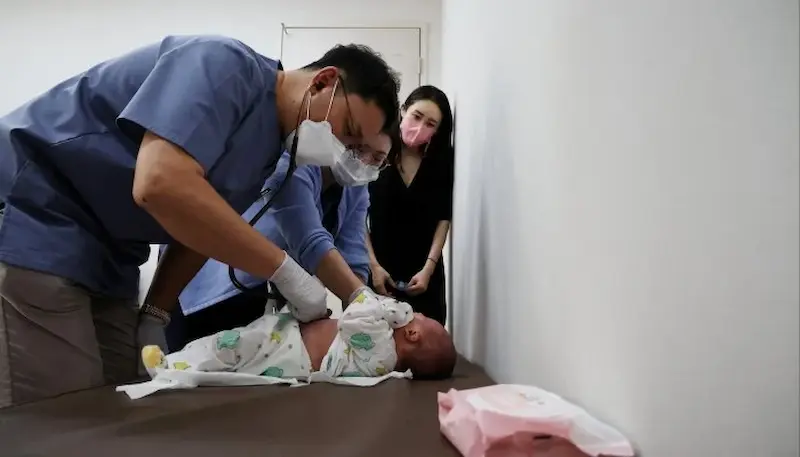


South Korea is bracing itself for a continuous decline in its already record-low fertility rate, exacerbating the country's demographic challenges. According to the latest population forecasts released by the statistical office, the number of expected babies per woman is projected to drop to 0.72 this year and continue falling until 2025 when it is anticipated to reach an alarming 0.65. This places South Korea, with its current fertility rate of 0.78 as of 2022, at the bottom of the world's list in terms of births per woman.
These new projections present a darker outlook for South Korea's demographic trends compared to two years ago when authorities predicted that the fertility rate would reach its lowest point at 0.7 in 2024 before showing signs of recovery. The declining fertility rate poses several challenges for the country, including a shrinking workforce, sluggish consumption, and concerns regarding national security due to a reduced pool of men available for military service amid threats from North Korea.
The potential economic ramifications of low fertility rates are significant, as a smaller workforce leads to diminished productivity and economic growth. Additionally, reduced consumption resulting from a declining population can dampen domestic demand and hinder the overall economic development of the country. Furthermore, the shrinking population poses threats to national security, as a smaller pool of eligible individuals for military service can strain defense capabilities.
To address the issue, the South Korean government has primarily focused on initiatives to encourage childbirth. These measures include increasing monthly allowances for parents and reducing mortgage interest rates. However, policymakers are acknowledging the need to confront the reality of an aging society and the fact that reversing demographic trends will be a long-term endeavor.
According to Statistics Korea's latest forecast, the population in 2072 is projected to be 36.2 million, representing a staggering 30% decline from the current population of 51.7 million. Even though the fertility rate may experience a slight recovery to 0.68 in 2026, the population is expected to decline each year starting in 2025.
Various factors contribute to the reluctance of Koreans to have children. High housing costs, the competitive nature of the education system, and increasing gender tensions are among the reasons frequently cited. These complex social and economic issues require multi-faceted approaches to tackle the root causes and encourage a more favorable environment for raising children.
In conclusion, South Korea's plummeting fertility rate is expected to worsen in the coming years, posing significant challenges for the country's economy and national security. While the government has implemented measures to boost birth rates, the reality of an aging society calls for long-term strategies to address the demographic crisis and create a sustainable future for South Korea.