


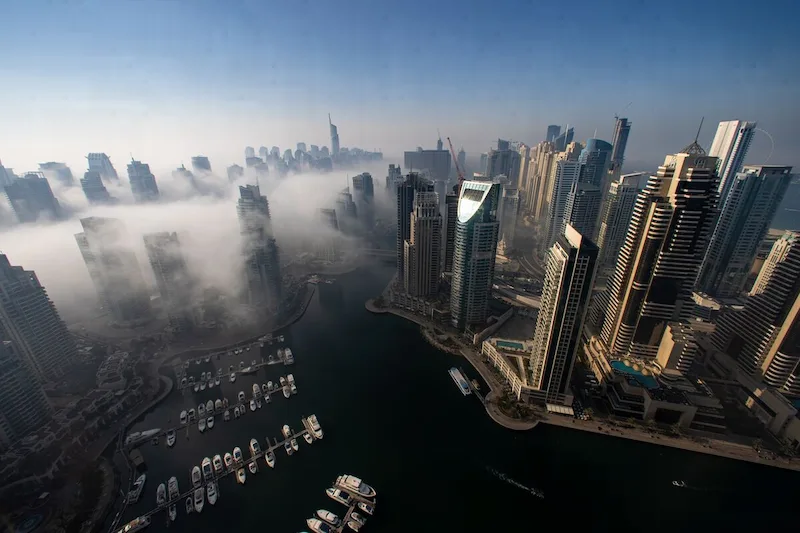


Dubai, once faced with an exodus of expatriates and fierce competition from neighboring business hubs, has managed to dodge the global commercial real estate crisis. This remarkable turnaround can be attributed to the government's decision to open up and implement key reforms aimed at attracting expatriates and encouraging business set-ups.
One of the pivotal changes made was the expansion of eligibility for long-term 'golden' visas, which severed the link between residency and employment. This move aimed to transform Dubai's transient image into a more desirable location for expatriates to settle down and establish businesses. The results are impressive, with a 30% increase in active business licenses in 2023 compared to the previous year, and a remarkable 75% increase from 2021.
The impact of these reforms is most evident in the city's commercial real estate market. While other global cities like London and New York experience slumping demand and low occupancy rates, Dubai is thriving. The occupancy rates in Dubai's financial district, known as DIFC, are at an all-time high, with scarce office space and rising rents. In fact, the most prominent tower in DIFC is up for sale with a potential valuation of up to $1.5 billion, showcasing the success of Dubai's real estate market amidst global downturns.
The influx of expatriates and the surge in demand have also extended beyond commercial real estate. Waiting lists for schools and clubs have grown longer, and key roads are frequently congested. In response to the growing population, the government has announced a $5 billion public transit project, and policymakers predict Dubai's population will reach 5.8 million by 2040 from the current 3.5 million.
Residential property prices are also soaring in Dubai. Despite high mortgage rates, average annual rents for villas have surged to nearly $88,500, and there is an increasing demand for high-end homes. The new rules have transformed Dubai's real estate market, with end users now accounting for 44% of property purchases compared to 29% in 2019, according to property broker Betterhomes.
Dubai's economic reforms have not only attracted expatriates seeking job opportunities but also those looking for a stable business environment and long-term horizons. The UAE authorities have recognized the importance of offering predictability and attractiveness to high-skilled professionals. While Saudi Arabia has also announced initiatives to attract foreign talent, Dubai's cosmopolitan nature and economic freedom continue to give it a competitive edge.
However, challenges remain for Dubai. Infrastructure, housing, and administrative capacity need to be developed to accommodate the influx of foreign white-collar workers and their families. Additionally, Dubai needs to establish retirement programs and comprehensive health insurance plans to enable long-term residency.
Furthermore, Dubai's diminishing tax-free status and the introduction of corporate taxes have the potential to hinder its ability to attract more foreigners. The increase in taxes and government fees may impact the cost of living in a city that is already considered one of the world's most expensive.
Despite these challenges, Dubai's resilience and innovative reforms have set it apart from other global cities grappling with economic downturns. Its ability to adapt and embrace change has attracted expatriates, businesses, and investors, positioning Dubai as a thriving hub in an uncertain global landscape.