


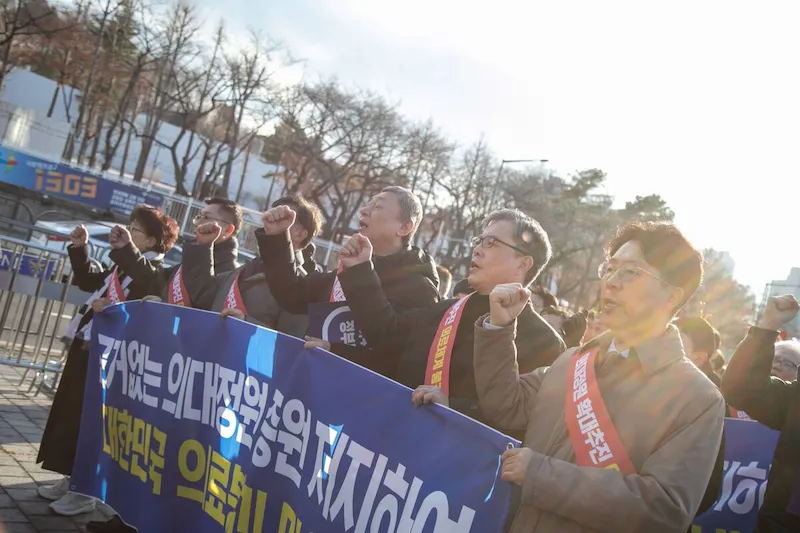


In South Korea, a standoff between trainee doctors and the government shows no signs of abating as the strike enters its second week. The government, led by President Yoon Suk Yeol, remains resolute in its plan to create 2,000 additional slots for medical schools to address the country's urgent need for more physicians. This move comes in response to South Korea's ranking near the bottom among OECD members in terms of doctor shortage. While Yoon's administration emphasizes the necessity of increasing the number of doctors, labor groups and doctors argue that fundamental issues within the healthcare system, such as uneven distribution of specialists and poor working conditions, remain unaddressed by the proposed plan.
The strike, which commenced last week, has already left a significant impact, with nearly 8,000 trainee doctors out of approximately 13,000 failing to report for duty by the end of the week. To mitigate the effects on patients, the health ministry has been closely monitoring emergency centers and opening state-run hospitals, ensuring that essential medical services are still accessible. However, the ministry has ordered over 6,000 trainee doctors back to work and rejected resignation letters from a substantial number of them in an effort to maintain healthcare services.
As tensions escalate, South Korea's Minister of the Interior and Safety, Lee Sang-min, has issued a warning, stating that investigations will be launched if doctors continue to collectively refuse to provide medical care despite government orders. The impact of the strike on public health is yet to be fully understood, with reports emerging of patients and their families facing challenges in accessing necessary medical treatment due to the strike.
In response to the ongoing crisis, the government has raised the healthcare alert to its highest level and is preparing for a protracted strike. Prime Minister Han Duck-soo announced measures to extend operating hours at public medical institutions and allow all hospitals and clinics to offer telemedicine services until the situation is resolved. The Korean Medical Association, a prominent doctors' lobby group, held a rally in Seoul and is planning further demonstrations in the coming days.
Despite the deadlock, President Yoon's plan has garnered significant public support, with polls indicating a modest increase in his popularity ahead of parliamentary elections in April. Yoon has framed the current initiative as just the beginning of efforts to increase the number of physicians, citing a need for an additional 15,000 doctors by 2035 to meet the healthcare demands of the population. As the stalemate continues, the future of healthcare in South Korea hangs in the balance, with both doctors and the government standing firm on their positions.