


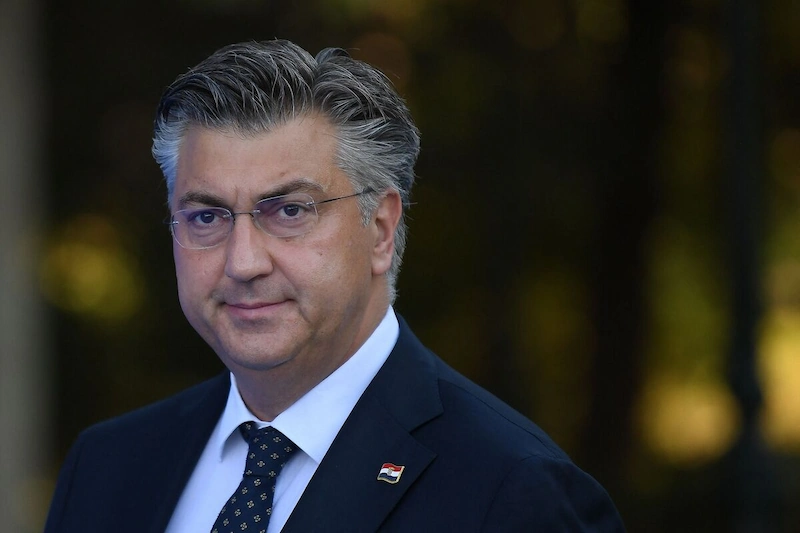


Croatian Prime Minister Andrej Plenkovic's grip on power hangs in the balance as the results of the national election paint a challenging picture. Facing a formidable opponent in President Zoran Milanovic, Plenkovic's center-right Croatian Democratic Union (HDZ) is set to secure the most seats in the 151-member parliament, according to exit polls. However, with only 58 seats projected for HDZ and 44 for the Social Democrats, both parties will need to form coalitions to secure a governing majority, putting the future government in a delicate position.
The outcome of the election holds significant implications for European Union solidarity on the issue of aid to Ukraine and sanctions against Russia. Under Plenkovic's leadership, Croatia has been a strong supporter of Ukraine within the EU, standing against Russia's invasion. In contrast, President Milanovic has criticized NATO's response to the conflict, calling it "not our war." If Milanovic leads the government, Croatia could align more closely with countries like Hungary and Slovakia, whose stances on aiding Ukraine differ from the EU consensus.
Plenkovic has warned that a Milanovic-led government would steer Croatia towards a "Russian world," marking a stark departure from the country's pro-EU stance since joining the bloc in 2013. Milanovic's decision to enter the election fray despite objections from the judiciary has added a layer of controversy to the campaign, with the president trading barbs with judges and refusing to step down until he secures a governing majority.
The Prime Minister, seeking a third term in power, had anticipated a smoother path to victory based on his government's achievements, including adopting the euro and advancing Croatia's integration within the EU. However, his party has been tainted by corruption scandals, with the indictment of former HDZ leader Ivo Sanader still casting a shadow over the political landscape. Plenkovic's tenure has seen several high-profile corruption cases involving cabinet members, stirring public discontent that Milanovic has skillfully leveraged during the election campaign.
As Croatia awaits the final election results and the subsequent coalition negotiations, the future direction of the country remains uncertain. The choice between continuity under Plenkovic's leadership and a potential shift towards a different geopolitical alignment with Milanovic at the helm underscores the pivotal crossroads at which Croatian politics currently stands.