


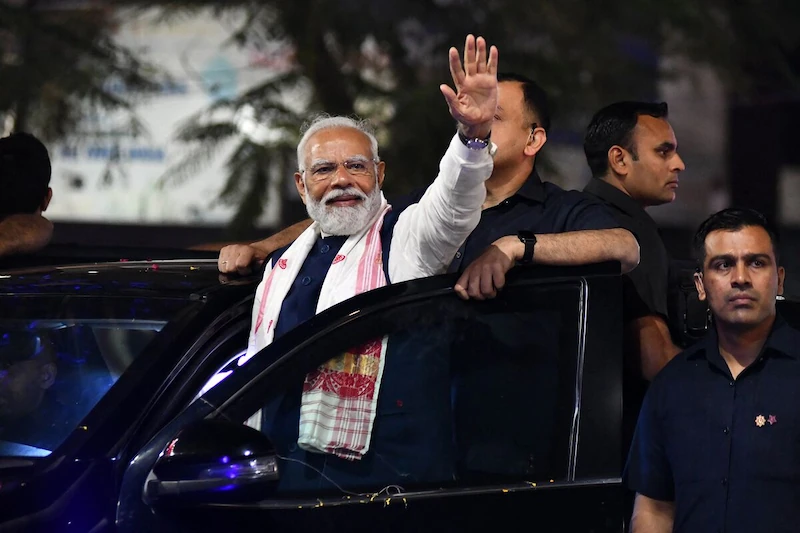


In what is shaping up to be a monumental political event, nearly 1 billion Indian citizens have embarked on the journey of casting their votes in the world's largest democratic exercise. Spread across more than six weeks and comprising seven phases, the elections will ultimately determine whether Prime Minister Narendra Modi secures a third consecutive term in office. As voters consider the prospect of extending Modi's tenure, they are faced with the task of evaluating his economic policies and Hindu nationalist agenda that have defined his leadership.
The first phase of voting on Friday saw the participation of the southern state of Tamil Nadu and 20 other regions. Modi's Bharatiya Janata Party (BJP) is leveraging the Prime Minister's personal popularity, economic achievements, and emphasis on promoting Hindu interests as key pillars of their campaign. In contrast, the opposition, a coalition led by the Indian National Congress, is highlighting concerns about democratic erosion and negligence towards unemployment and poverty under Modi's leadership.
The electoral process undertaken by nearly two-thirds of registered voters by 5 p.m. local time on Friday demonstrated a significant turnout, with West Bengal leading the pack at 77.57%. Amidst the voting fervor, the financial markets in India remained relatively subdued, with attention diverted to global developments, such as the escalating tensions in the Middle East. The Indian rupee experienced fluctuations, hitting a record low before rebounding, while stocks closed the day with a modest gain of 0.8%.
With aspirations of securing a sizeable victory and expanding their parliamentary majority, the BJP aims to clinch at least 370 out of the 543 seats in the Lok Sabha and potentially reach 400 seats with support from allied parties. A victory for the BJP would likely result in a continuation of infrastructure development, economic policies, and efforts to bolster India's global standing. In contrast, an opposition triumph could herald a focus on strengthening democratic institutions and implementing educational reforms.
This high-stakes election arrives at a pivotal moment for India, with the country gaining increasing prominence on the global stage. The strategic interest shown by the U.S. in cultivating ties with India and the influx of international companies seeking to establish a presence in the country underscore its growing significance. Modi's popularity has been buoyed by India's thriving economy, marked by robust growth rates surpassing 7% and popular social welfare programs.
However, Modi's Hindu nationalist agenda, aimed at elevating the status of Hinduism in public life, has drawn criticism from opponents for its divisive nature and departure from India's secular foundations. The opposition's platform focuses on economic revitalization, promising initiatives such as agricultural price guarantees, job creation, and financial support for women. Despite facing challenges including defections and legal controversies, the opposition remains steadfast in its efforts to appeal to voters seeking alternative leadership.
In addition to the national elections, two northeastern states, Sikkim and Arunachal Pradesh, are also undergoing state legislative elections on Friday, with results set to be announced on June 2. As the Indian electorate navigates this crucial electoral process, the outcome of the polls on June 4 will determine the trajectory of the world’s largest democracy and shape the future course of the nation.