


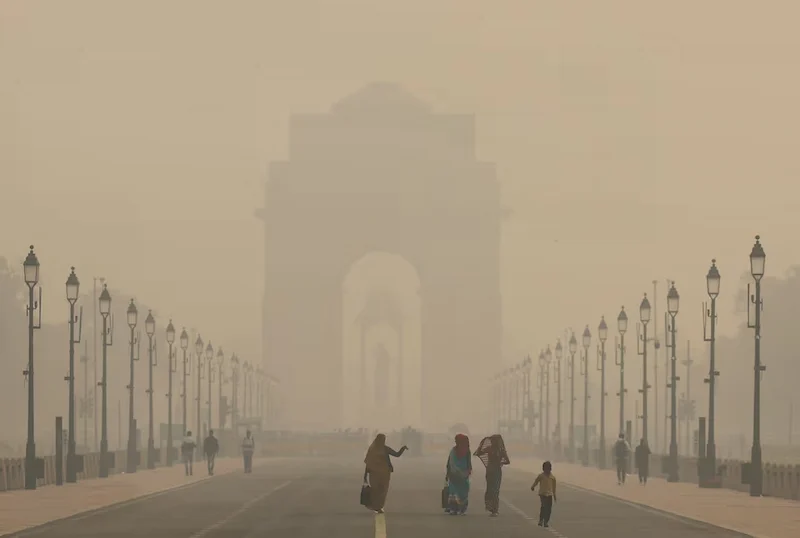


In the northern regions of India, residents are facing another day of hazardous air quality as a thick blanket of fog envelops the area, exacerbating the pollution levels in the capital city of Delhi. This annual battle with air pollution during the winter season is worsened by the stagnation of cold, heavy air that traps dust, emissions, and smoke from illegal farm fires in Punjab and Haryana.
On Monday, Delhi saw its air quality index (AQI) soar to a peak of 491, leading the government to impose restrictions on vehicle movement and construction activities. Schools were also advised to conduct classes online to protect students and staff from the severe pollution levels. Meanwhile, over in Pakistan, the Punjab province witnessed an improvement in air quality, prompting the reopening of schools in Lahore and Multan after being shut for over a week due to hazardous pollution levels.
The contrast in air quality is stark, with Lahore's AQI dropping to 158, although still deemed unhealthy. In comparison, New Delhi has been ranked as the world's most polluted city by Swiss group IQAir, with air quality reaching a "hazardous" level of 489. However, there has been a slight improvement from the drastic reading of 1,081 on the previous day.
The Indian weather department highlighted a positive development in visibility as the fog layer shifted towards the state of Uttar Pradesh, leading to improved conditions over Delhi. Nevertheless, the city of Agra, located in Uttar Pradesh, has been experiencing zero visibility, obscuring the iconic Taj Mahal in a veil of toxic smog for nearly a week.
The stringent measures implemented to address the high pollution levels have had economic repercussions, impacting over 3.4 million micro, small, and medium enterprises in Punjab, Haryana, and Delhi. The need for sustainable solutions to combat air pollution remains urgent as the health and well-being of millions of residents in northern India continue to be at risk.