


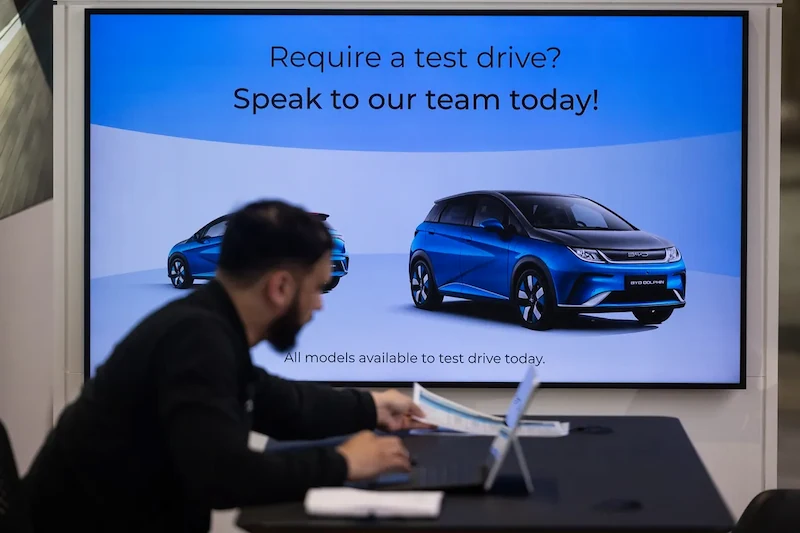


In a significant shift towards sustainability, the UK witnessed a remarkable surge in electric vehicle (EV) sales last month, with nearly one in three new cars registered being fully electric. Automakers have been slashing prices of plug-in models to comply with the country's EV sales mandate, which mandates a target of 22% of EV sales annually. However, despite a year-end push that saw EV sales jump by approximately 60% to nearly 44,000 units, the industry fell short of meeting the quota.
As manufacturers faced the looming threat of fines reaching up to £15,000 per vehicle for non-compliance, the government is revisiting the rules to offer increased flexibilities. Critics have expressed concerns that easing the quota requirements may hinder the transition away from combustion engines, emphasizing the urgent need to accelerate the adoption of clean energy vehicles.
While the UK outperformed the European Union in maintaining stronger EV sales, especially amidst the reduction of incentives in key markets like Germany, the adoption rate among private buyers remains relatively low, with only one in ten opting for an EV in 2024. Contrastingly, business and fleet customers have been the primary drivers of the burgeoning EV demand in the UK.
Against this backdrop, Stellantis NV's decision to halt Vauxhall van production at its Luton plant after a century of operations underscores the profound impact of regulatory pressures on manufacturing strategies. The evolving landscape of the automotive industry in the UK reflects a complex interplay between regulatory mandates, market dynamics, and consumer preferences steering the transition towards a sustainable future.