


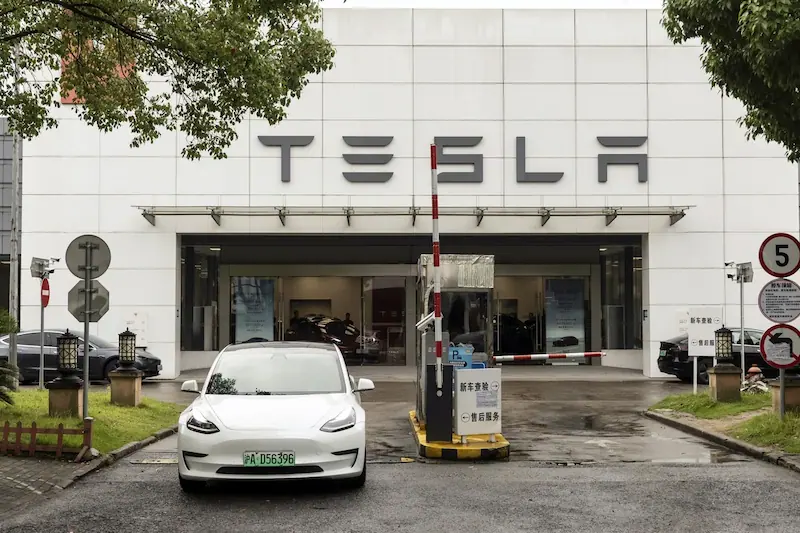


In a move to address potential safety risks, Tesla Inc. is set to roll out a software update to approximately 1.2 million vehicles in China. The update will target issues related to power steering and rear-view cameras that could compromise the safety of the vehicles.
The power steering problem, attributed to a software glitch, has the potential to lead to a failure in the electronic power steering system, posing a safety hazard. Additionally, concerns have been raised about the rear-view cameras in the vehicles, with fears that malfunctions could impede drivers' visibility while reversing and ultimately increase the risk of accidents.
Around 871,087 locally produced Model 3 and Model Y vehicles will receive the software fix to address the power steering issue. An additional 335,716 cars, including imported Model S and Model X electric vehicles alongside locally produced Model 3 and Model Y models, will be updated to rectify the camera malfunction.
Tesla, mindful of customer safety, will provide free replacements to owners who are unable to receive the software update remotely. Earlier this month, a similar recall was initiated in the United States, affecting approximately 240,000 vehicles.
The EV giant, led by Elon Musk, has sold roughly 2.3 million vehicles in China thus far. However, Tesla is now contending with intensifying competition from Chinese automakers such as BYD Co. in the rapidly evolving automotive market of China. The influx of local competition has resulted in Tesla experiencing a contraction in its global vehicle deliveries for the first time in more than a decade, and in barely maintaining its lead over BYD as the primary seller of fully electric cars in 2024.
Furthermore, Tesla is grappling with a decrease in market share in China, with Teslas making up approximately 10.6% of total battery EV retail sales last year, down from close to 16% in 2020. This shift comes as local manufacturers in China continue to innovate and offer appealing alternatives across various price ranges in the electric vehicle sector.
In a related development, Xiaomi Corp. also announced a recall of 30,931 SU7 electric sedans due to a software issue surrounding the vehicles' intelligent parking feature. The vehicles, produced between February and November last year, were identified as potentially posing a safety risk, prompting the recall.