


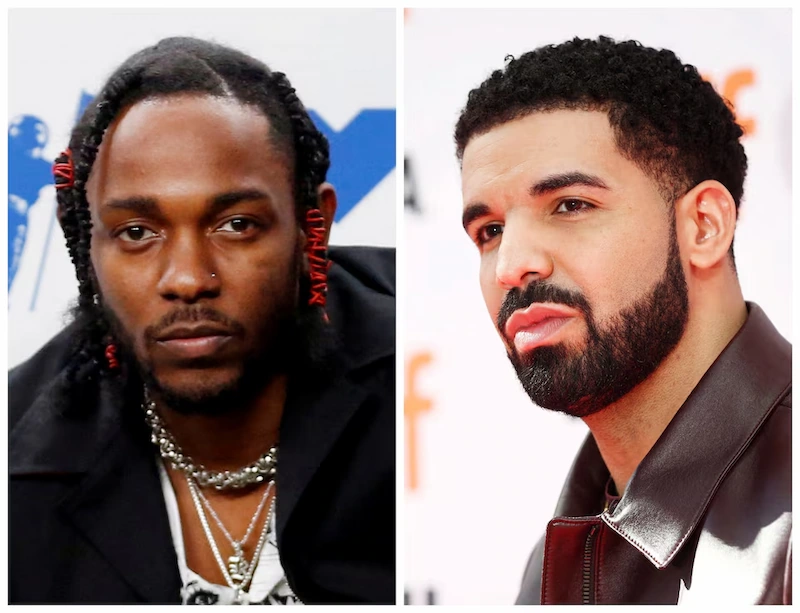


In an unprecedented move, Drake has amplified his defamation lawsuit against Universal Music Group, citing the negative impact of Kendrick Lamar's performances of the controversial song "Not Like Us" during the Super Bowl halftime show and the Grammy Awards. The Canadian rapper alleges that the heightened exposure from these high-profile events has led to an increase in threats against him and his family, as more individuals were influenced to believe the false accusations of pedophilia made in the song.
The amended complaint, filed by Drake's legal team, asserts that Kendrick Lamar intentionally showcased the slanderous lyrics of "Not Like Us," particularly the line "Drake, I hear you like 'em young," during the Super Bowl performance seen by millions. Drake claims that this calculated move was aimed at tarnishing his reputation, marking a disturbing moment in the music industry where a performance was used to defame another artist on such a grand scale.
Universal Music Group, the record label caught in the crossfire, has vehemently denied Drake's claims, stating that his accusations are unfounded and that the lawsuit poses a threat to creative expression. The ongoing legal battle has brought to light the complex dynamics of the music industry and the power struggles that can arise between artists and the entities that represent them.
As the lawsuit progresses, Drake is seeking unspecified damages for the reputational harm caused by UMG's alleged promotion of Kendrick Lamar's song. His lawyer, Michael Gottlieb, has emphasized the accountability that UMG must face for its purported role in perpetuating the defamation against Drake.
The feud between Drake and Kendrick Lamar dates back several years and has been characterized by a series of diss tracks exchanged between the two artists. With both musicians commanding significant influence and acclaim in the industry, the lawsuit underscores the high stakes involved in protecting one's reputation in the competitive world of music.
Despite the legal battle and the rift between the artists, the music world continues to be captivated by their artistry. As the case unfolds in the U.S. District Court for the Southern District of New York, the implications for the future of artist relations and creative expression within the music industry remain uncertain.