


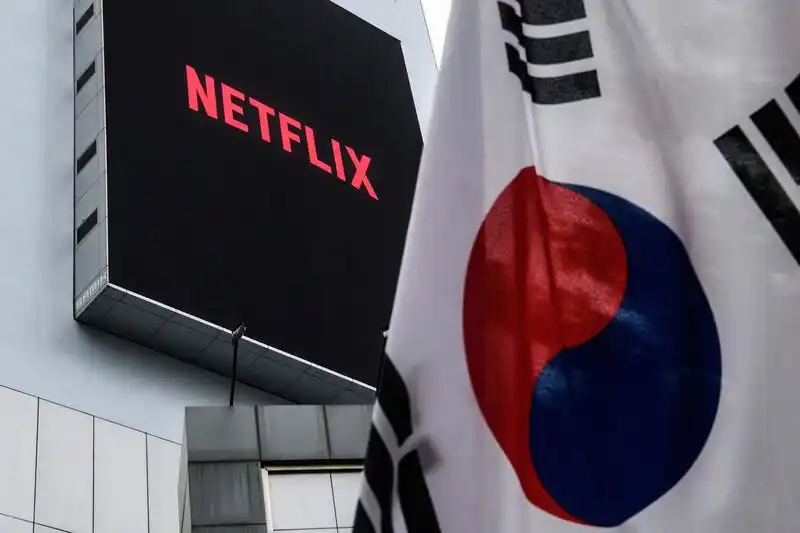


Despite the global interest in South Korean film and television productions, the stock prices of many South Korean production companies have been declining. This is despite the country's benchmark stock index, KOSPI, having risen by 10% over the same period. Shares of Studio Dragon Corp., one of South Korea’s largest production companies, dropped about 25% this year alone. This has raised concerns about the lack of bargaining power among Korean production companies with Netflix, the dominant streaming service in the market.
According to Jeongin Hong, owner of SLL, a Korean firm that produces titles for Netflix, the main risk to the local industry is that Netflix is the only channel through which Korean series can reach global audiences. Hong notes that many studios and producers are concerned that Netflix has amassed too much power, as it has twice as many customers in South Korea as TVing, the second largest streaming service, and is the only global player with a significant presence in the market. Consequently, Netflix can be more selective in the projects it chooses and dictate the terms to the detriment of local production firms.
The impact of Netflix's dominance on local production firms can be observed from the declines in share prices of companies like ContentreeJoongAng, the majority owner of SLL, which dropped almost 20% this year. Many regulators and TV producers in countries with significant local content have been warning about the threat of US-based tech firms like Netflix and Amazon decimating their local TV networks and stifling the development of homegrown players. Media Partners notes that Netflix accounts for 33% of streaming video subscribers in South Korea and for 42% of premium-video viewership in Southeast Asia, while Midia Research shows that it accounts for 30% or more of customers in the UK, France, and Sweden.
Most countries impose regulations requiring streaming services to invest in local content to protect their local industries. France, for example, has mandated that these services allocate at least 20% of their revenue generated within the country to fund local programming. Additionally, France stipulates that theatrical releases can only appear on a streaming service after three years, though the country reduced the window to 15 months last year.
Despite having rules in place for decades to protect its local film industry from foreign competition, South Korea's recent experience shows the limitations of those regulations requiring foreign companies to invest locally. The challenge is not so much that Netflix isn't interested in local content, but rather that its dominance gives it an edge in acquiring shows and movies, taking much of the value of South Korean content back to California. As Jeongin Hong notes, "Directors want international fame and international coverage, that can only come from Netflix."