


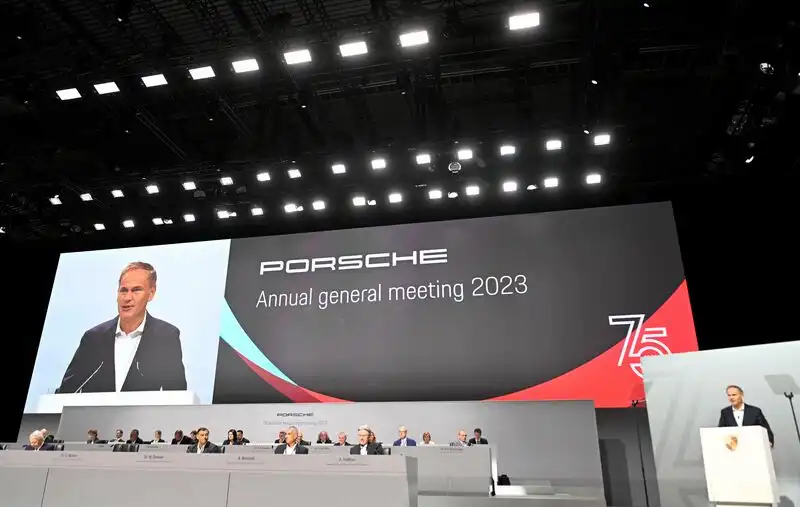


Porsche AG unveiled its ambitious plans to invest over €20 billion ($21.9 billion) in the coming years to equip its vehicles with advanced electric and digital technology. This announcement was made during the luxury car manufacturer's first annual general meeting since going public last year. Porsche aims to shift its focus towards battery technology while ensuring that its profit margins remain strong, targeting returns of over 20% in the long term.
As a subsidiary of Volkswagen AG, Porsche has traditionally been the primary source of cash flow for the parent company, which has been struggling to improve profitability within its mass-market brands. However, Porsche has gained some independence since its listing and is implementing various measures to optimize returns. These initiatives range from developing their proprietary software to designing high-performance batteries.
Porsche CEO Oliver Blume expressed concerns about Volkswagen's software unit, Cariad, which has caused significant delays in the launch of key models, including the electric Macan. In response, Blume has brought in Sajjad Khan, former technology chief of Mercedes-Benz Group AG, to oversee Porsche's software efforts and has plans to recruit more than 1,000 experts in electrification and technology.
In addition to internal developments, Porsche has also forged strategic partnerships with industry leaders. This year, they joined forces with Mobileye Global Inc. to collaborate on autonomous driving technology. Porsche also took control of Cellforce, a venture dedicated to developing high-performance battery cells. These partnerships and acquisitions will accelerate the company's progress in the rapidly evolving automotive sector.
While Porsche has seen success with their first electric vehicle, the Taycan, some investors raised concerns about the company's heavy dependence on combustion engines. Although Porsche is committed to expanding its electric lineup, there are no immediate plans to introduce a plug-in hybrid version of their iconic 911 sports car. This decision highlights the brand's unique sporty focus, which has traditionally relied heavily on internal combustion engines.
Outside the shareholders' meeting in Stuttgart, climate activists staged protests, criticizing Porsche's contribution to rising CO2 emissions and highlighting founder Ferdinand Porsche's Nazi sympathies. Similar demonstrations occurred at Volkswagen's annual meeting earlier this year. These events highlight the increasing pressure on automobile manufacturers to address environmental concerns and historical connections.
Overall, Porsche's substantial investment in electric and digital technology, coupled with its focus on optimizing profitability, demonstrates the brand's commitment to remaining at the forefront of the luxury car market. The company's proactive approach to innovation and its ability to adapt to changing industry demands will undoubtedly contribute to its continued success in the future.