


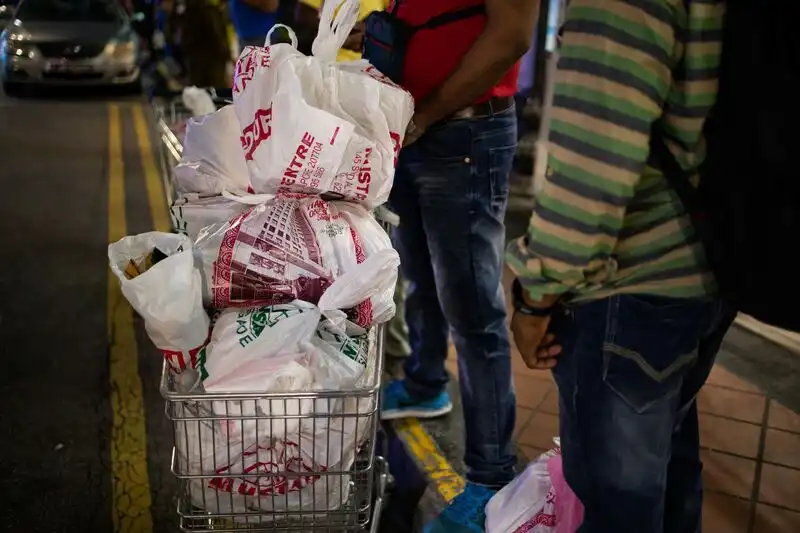


Major supermarket chains in Singapore have finally taken the plunge and started implementing charges for plastic bags, following in the footsteps of countries like South Korea and Japan. The long-awaited move aims to promote the use of reusable tote bags and curb excessive plastic consumption. Starting from Monday, approximately 400 outlets, accounting for two-thirds of all supermarkets in Singapore, will be required to charge customers a minimum of S$0.05 ($0.04) for each disposable bag. Although the fee applies to bags made from any material, plastic bags are the predominant type used in major grocery stores such as FairPrice, Sheng Siong, and Cold Storage.
The National Environment Agency of Singapore highlighted the environmental impact of disposable bags, regardless of their composition. Whether made of paper, plastic, or biodegradable materials, such items contribute to waste production, carbon emissions, and ultimately exacerbate the climate crisis. Singapore's Zero Waste Masterplan sets an ambitious goal to reduce landfill waste by 30% by 2030. However, compared to other Asian countries, Singapore has been slow in adopting measures to tackle plastic consumption in retail stores. Japan adopted a mandatory charge for plastic bags in all retail outlets in 2020, while South Korea banned single-use plastic bags in major supermarkets as early as 2019. Thailand also implemented a ban on single-use plastic bags in large stores in 2020.
As part of the new policy, the Singapore government is urging supermarket chains to donate the proceeds from the bag fees to environmental or social causes. Some stores have already started implementing the charges even before the official deadline on Monday. Notably, international chains like Uniqlo and Cotton On, which are excluded from this policy, have already enforced bag charges or completely banned plastic bags.
While the introduction of fees for plastic bags is viewed as a long-overdue and necessary step, some experts believe that it may not be sufficient to deter consumers from using them. Sumit Agarwal, a professor at the National University of Singapore's School of Business, expressed his reservations, stating that while charging for bags is a positive move, additional measures may be needed to change consumer behavior.
With this new initiative, Singapore hopes to contribute significantly to its Zero Waste Masterplan and reduce plastic waste. By raising awareness of the environmental impact of single-use bags and promoting sustainable alternatives, the city-state can take significant strides towards a more sustainable future.