


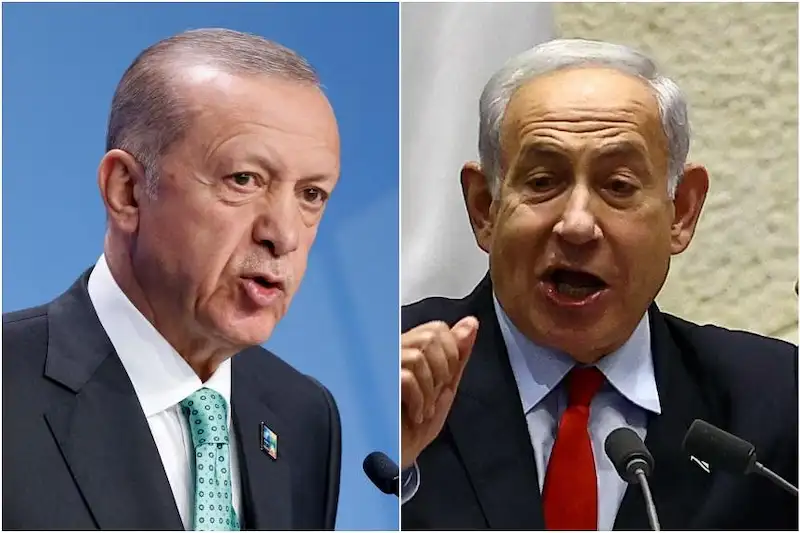


Turkish President Recep Tayyip Erdogan and Israeli Prime Minister Benjamin Netanyahu are scheduled to meet next week in an effort to further improve their countries' relations, particularly in the areas of energy and trade. This meeting comes as both leaders seek to strengthen ties with Middle Eastern states, given the geopolitical shifts caused by Russia's invasion of Ukraine.
The meeting between Erdogan and Netanyahu will take place in Ankara on July 28, following Erdogan's hosting of Palestinian Authority President Mahmoud Abbas a few days earlier. The Israeli-Palestinian conflict is expected to be a key topic of discussion during the meeting. Erdogan's office stated that they will review all aspects of the bilateral relationship between Turkey and Israel and explore potential steps to enhance cooperation.
Erdogan emphasized the importance of energy cooperation during the upcoming visit, particularly the prospect of natural gas reaching Europe through Turkey. He mentioned the high delivery costs associated with transfers from the Mediterranean and expressed his hope that the meeting with Netanyahu would mark the beginning of a warmer period in Turkey-Israel relations.
Both Turkey and Israel are eager to expand their cooperation in various sectors, including tourism and business. They are also exploring the possibility of exporting gas from a field off the Gaza Strip to Europe via Turkey. However, the exact quantity of gas in that field remains uncertain, and the distribution process is likely years away due to the lack of export infrastructure.
Despite past tensions and disagreements over the status of Palestinian territories, a potential gas deal between Turkey and Israel has the potential to bridge the gap and improve relations. The recent resumption of full diplomatic relations between the two countries, following a low point after the Israeli raid on a Turkish flotilla in 2010, has provided a foundation for further collaboration.
Both Turkey and Israel have also been working towards repairing relations with Arab countries in the region. Netanyahu's government has established diplomatic ties with the United Arab Emirates and Morocco in 2020 and is seeking to do the same with Saudi Arabia. Erdogan, on the other hand, recently signed defense and economic cooperation deals with Saudi Arabia and the UAE during a visit to the Gulf.
A surge in tourism has also contributed to the growing trade between Turkey and Israel. With the resumption of cruise trips and direct flights from Israel to popular Turkish resorts, such as Antalya and Bodrum, the number of Israeli tourists visiting Turkey is expected to exceed 1 million this year, a 19% increase from 2022.
In 2021, Turkish exports to Israel reached $7 billion, an 11% increase from the previous year. Israel's imports from Turkey primarily consist of steel, iron, and other construction materials, amounting to approximately $2.5 billion.
Overall, the upcoming meeting between Erdogan and Netanyahu represents an important step towards strengthening economic cooperation and improving relations between Turkey and Israel. It also aligns with their broader efforts to foster closer ties with other Middle Eastern nations in the wake of geopolitical shifts in the region.