


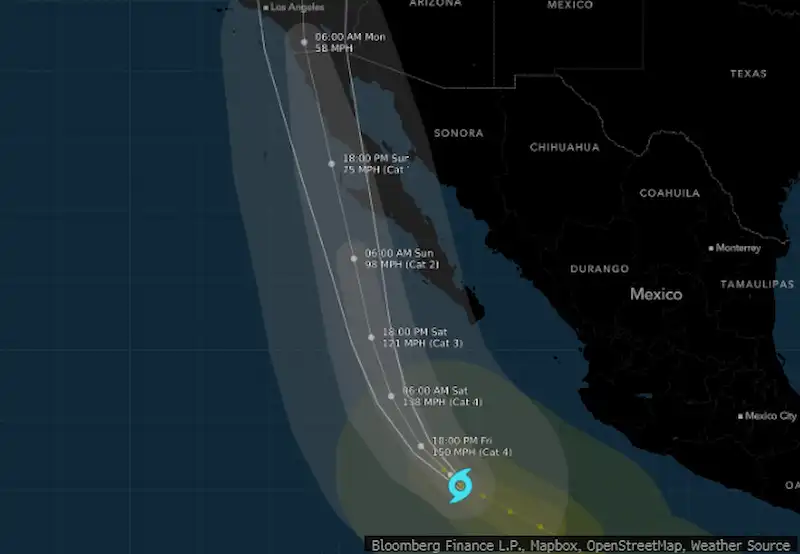


The intensification of Hurricane Hilary has caused concerns as the rare storm now reaches Category 4 status and moves towards California. Fueled by warm water, Hilary rapidly transformed from a tropical storm to a major hurricane, with winds reaching 145 mph (233 km/h). The US National Hurricane Center predicts that Hilary will make landfall in Mexico over the weekend before moving towards California and the US Southwest, bringing with it heavy rainfall and potential flooding.
As a precautionary measure, hurricane and tropical storm watches and warnings have been issued along the Baja California coastline in Mexico and parts of its mainland shore. The peninsula is expected to experience flooding rains throughout the weekend, posing a risk of landslides.
Forecasters anticipate that Hurricane Hilary may even strengthen further, potentially reaching Category 5 status on the Saffir-Simpson scale, before encountering cooler waters. However, the storm is likely to lose intensity by the time it nears landfall. The US National Hurricane Center predicts that Hilary's winds will have weakened to around 75 mph as it hits Mexico's Baja California. By the time the storm reaches California, it is expected to be at tropical storm strength and further weaken as it moves inland.
Despite the potential decrease in intensity, Hilary is still expected to bring widespread heavy rainfall to California and the US Southwest. This raises concerns for power outages, mudslides, and flooding, along with disruptions to ground transportation and air travel. The region could start experiencing rain as early as Saturday, with the worst of it arriving on Sunday into Monday.
Meteorologist Adam Douty warns that a wide area could receive 2 to 4 inches of rain, similar to the powerful winter storms that often hit California and cause flooding. Desert communities such as Palm Springs, as well as the numerous railroad lines passing through the area and mountains, could be at risk. Flood watches have been issued for parts of California, Arizona, Nevada, and Utah, including major cities like Los Angeles, San Diego, and Las Vegas. The California Governor's Office of Emergency Services has specifically highlighted Southern California, particularly San Diego, as an area at high risk of flooding.