


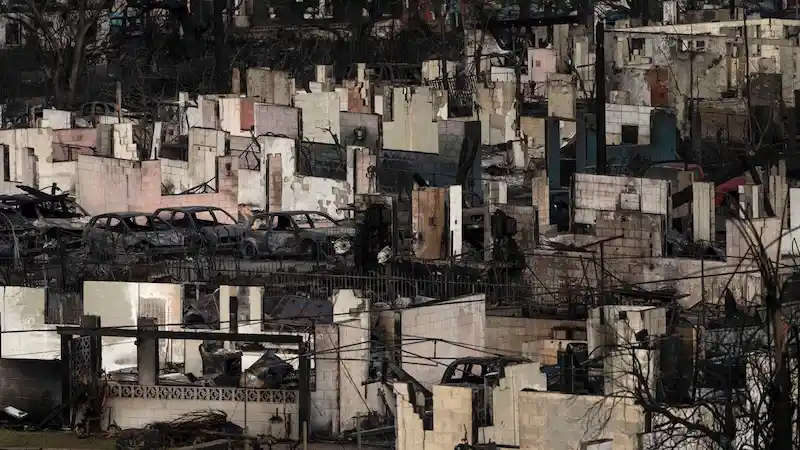


Beyond the devastating human toll from the recent wildfires on Maui, there will be a financial cost far above what a disaster like this would have caused on the mainland.
The process of rebuilding the more than 2,200 homes and businesses that state officials say have been damaged by the Hawaiian fires will be far more expensive than building or repairing comparable homes in the continental United States. This is due to several factors that make doing business in Hawaii significantly more expensive than on the mainland.
According to Moody Analytics, the cost of doing business in Hawaii is about 30% higher compared to the rest of the United States. Specifically, construction costs in Hawaii are estimated to be 44% higher than on the mainland, as reported by catastrophe modeling firm Verisk. This estimate is likely conservative, as historical events have shown that building delays and supply and demand fluctuations can further increase reconstruction costs.
Even before the fires, the prices for building materials in Hawaii were already 35% to 40% higher than on the mainland. The surge in demand for these materials following the fires could lead to shortages and further price increases. Additionally, the need to ship these materials to the island can cause supply chain disruptions and delays, similar to what was experienced during the pandemic.
Hawaii's stricter regulations also contribute to higher costs. For example, all lumber imported into the state must be treated for termites, adding to the overall expense. Furthermore, construction permitting generally takes longer in Hawaii compared to most mainland locations.
Labor costs in Hawaii are among the highest in the nation, particularly for construction workers. According to the Labor Department, the average construction worker in Hawaii earned about $60,700 in 2021, which is 32% higher than the national average. This wage premium is even higher during the reconstruction efforts. The shortage of construction workers in Hawaii exacerbates the situation, making it more challenging to find skilled labor.
Unlike other disaster-prone states where workers from neighboring areas can easily commute, Hawaii's remote location and high cost of living make it difficult for workers to move to the state temporarily. The lack of affordable housing further discourages temporary relocation, adding to the labor challenges.
Overall, the process of rebuilding after the Maui wildfires will be a costly endeavor. The higher construction costs, increased prices of building materials, and challenges in labor availability will significantly impact the rebuilding efforts. While the financial burden of this disaster on the island is yet to be fully realized, it is clear that the cost of recovery will be far greater than what would have been incurred on the mainland.