


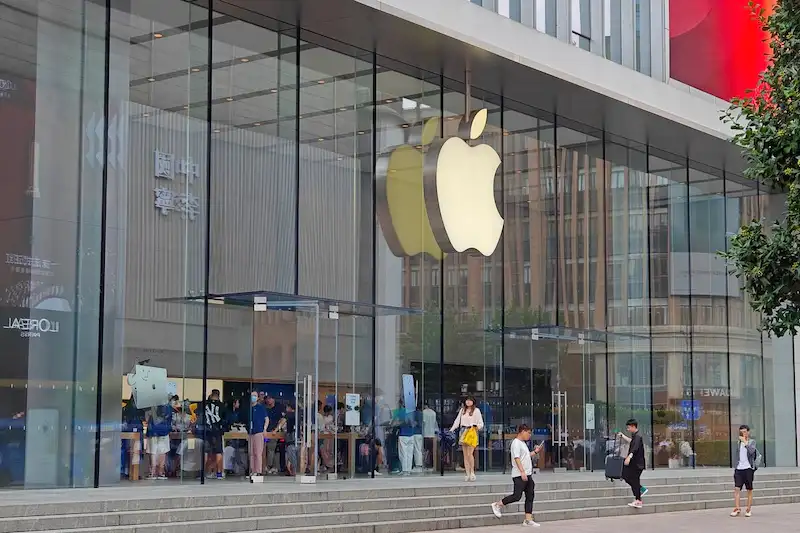


As Apple prepares to unveil its latest iPhone, the tech giant is facing a crisis in its largest international market: China. With controversies brewing and rising competition from domestic brands, Apple is in a precarious position just days before its highly anticipated product launch.
One major challenge Apple is contending with is the growing ban on iPhone use among government workers in China. This ban, coupled with the emergence of a new phone from China's Huawei Technologies Co., is posing a serious threat to Apple's market share in the country.
However, the most nebulous threat to Apple's success in China is the resurgence of Chinese nationalism. This surge of patriotism has the potential to lead everyday consumers to shun foreign-branded devices, including the iPhone. Apple has faced similar challenges in the past, falling short of sales expectations due to weak demand in China. Chief Executive Officer Tim Cook cited Chinese nationalism as one of the factors contributing to this downturn.
Adding to Apple's woes, recent controversies surrounding Huawei have caused US lawmakers to renew their scrutiny of the Chinese tech company's suppliers. Some lawmakers are even calling for a halt to all US exports to Huawei. The issue revolves around China's top chipmaker, Semiconductor Manufacturing International Corp., which appears to have violated American sanctions by supplying components for Huawei's new phone. Legislation targeting TikTok, owned by ByteDance Ltd., has also been proposed.
This backdrop of anti-Apple sentiment in China has spread to social media, with users expressing their preference for domestic brands and vowing to never purchase an Apple device. There have even been rumors that China Mobile Ltd., the country's wireless carrier, may not stock the upcoming iPhone 15, though the company denied these claims.
Despite these challenges, there's currently no evidence of a widespread shift away from Apple in the Chinese smartphone market. In fact, Apple was one of the few smartphone sellers to experience growth in the second quarter of this year. Huawei, with a smaller market share than Apple, was the only other major manufacturer to show an increase in sales.
While the Chinese market has been a bright spot for Apple amidst a period of overall sales decline, the company is hoping that the iPhone 15 line, with its new features and enhancements, will help reverse this trend. It remains to be seen how much impact the ban on iPhones among government workers and the rise of Chinese nationalism will have on Apple's success in China.
In the end, the Chinese government has a delicate balance to strike. While there may be incentives to limit iPhone usage, they also recognize the significant contribution Apple makes to their economy and the employment it generates. Punishing Apple too severely could result in negative consequences for its own people.