


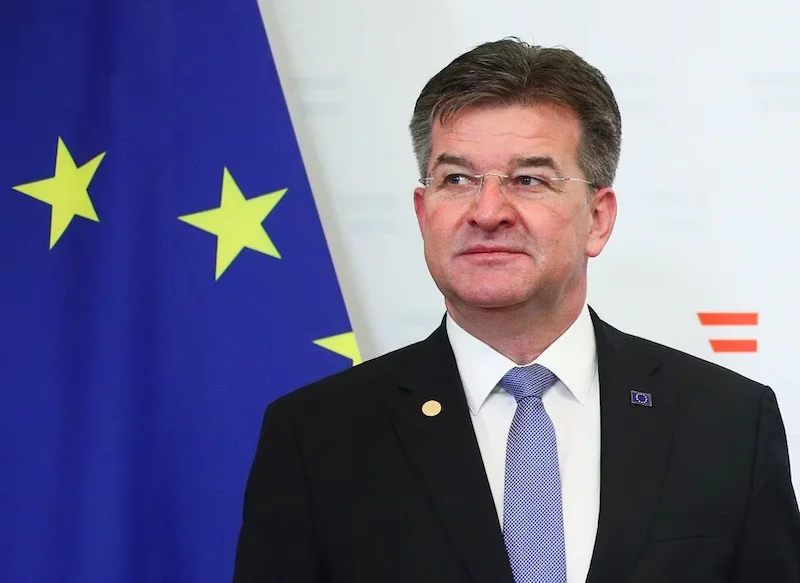


In the wake of last month's violent clashes in northern Kosovo, Miroslav Lajcak, the European Union's Special Envoy, has called upon Serbia and Kosovo to return to the negotiating table. Lajcak expressed concern over the escalating tensions between Belgrade and Pristina since armed Serbs stormed the village of Banjska, barricading themselves in a Serbian Orthodox monastery. The incident resulted in a shootout, leaving three attackers and a Kosovo police officer dead. In an effort to prevent such violence from occurring again, Lajcak emphasized the importance of dialogue during a meeting with Kosovo Prime Minister Albin Kurti.
The recent gun battle in Banjska has raised international concerns about the stability of Kosovo. The predominantly ethnic Albanian nation declared independence from Serbia in 2008, following a guerrilla uprising and NATO intervention in 1999. Lajcak, accompanied by representatives from France, Germany, Italy, and the United States Special Envoy for the Western Balkans, Gabriel Escobar, visited the region to assess the situation. The delegation later held discussions with Serbian President Aleksandar Vucic to stress the necessity of dialogue for the future of both Serbia and Kosovo.
Lajcak reiterated that normalizing relations between Belgrade and Pristina is essential for the European future of both nations. The dialogue between the two will be a focal point during the upcoming EU foreign ministers meeting on Monday. However, the situation remains contentious as around 50,000 ethnic Serbs residing in northern Kosovo do not recognize the authority of Pristina and consider Belgrade their capital. Past clashes with Kosovo police and international peacekeepers have been a recurring issue, but last month's violence marked a significant escalation.
Lajcak urged Pristina to work toward establishing an association of Serb municipalities, offering greater autonomy to the Serb-majority areas. However, Kurti has rejected the proposal, fearing it could lead to secession and eventual unification with Serbia. Meanwhile, Pristina authorities have accused Belgrade of supporting and arming the Serb fighters in Banjska, a claim that Serbian authorities have vehemently denied.
To prevent further escalation of conflict, Lajcak called upon Belgrade to thoroughly investigate the events in Banjska and bring any perpetrators to justice. Serbia, maintaining its refusal to recognize Kosovo's independence, still considers it a part of its territory. The situation remains sensitive, and a peaceful resolution through dialogue and negotiation is crucial for the stability of the region.