


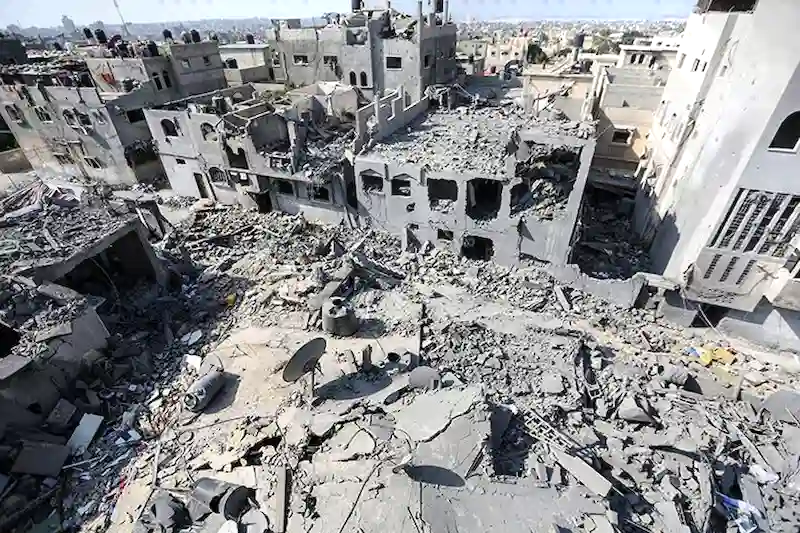


After more than two weeks since Israel declared war on Hamas and prepared for a ground invasion, there are growing calls within the country to reassess the scope and timing of such an operation. The pressure to reconsider the ground invasion comes from various concerns, including the potential involvement of Hezbollah in Lebanon, the fate of hostages held in Gaza, and the risk of Israeli military casualties. While a ground invasion is not off the table, the nature and timing of the operation are being reevaluated on a daily basis.
Some security veterans are urging caution, suggesting that Israel should respond methodically rather than rushing into an invasion to avenge the Hamas attacks that sparked this conflict. The idea is that every day that passes without a ground operation benefits Israel and weakens Hamas. Additionally, more time allows the Israeli Air Force to shift its focus towards potential threats from the north, specifically from Hezbollah.
While dismantling Hamas remains the ultimate goal, defense officials argue that patience is crucial to create a "new security reality" for the region. Delaying the ground invasion may also lead to a shift in strategy, focusing more on specific targets rather than a broad takeover. The use of the term "maneuver" instead of "invasion" denotes a more targeted and strategic approach.
Hostage negotiations are also playing a role in the decision-making process. Western governments are pressuring Qatar, which hosts Hamas political leaders and has contributed significant funds for infrastructure projects in Gaza, to help free the hostages. Last Friday, two Americans were released through negotiations brokered by Qatar. Talks are reportedly making progress, further contributing to the reconsideration of a ground invasion.
Prime Minister Benjamin Netanyahu, who has faced criticism for the security failures that led to this conflict, appears to be more cautious about using troops on the ground than some in the military and defense establishment. The belief is that Israel can take its time due to the intensity of the aerial attacks against Hamas. These attacks have already resulted in significant damage to the group, potentially weakening them further.
However, a ground invasion into Gaza still carries significant risks for Israeli troops. Hamas is known to have an extensive network of underground tunnels that have not been completely destroyed. It is likely that militants would be waiting in these tunnels to respond to an invasion, increasing the potential for clashes and casualties.
The United States is playing a significant role in Israel's planning, providing advice and support while also raising uncomfortable questions. They are urging Israel to consider the consequences of destroying a movement that encompasses not only military aspects but also political and religious dimensions. The US is also highlighting the need to minimize civilian casualties and calling for the provision of humanitarian aid to the 2 million Palestinians in Gaza.
Israel's leadership acknowledges the need to send distinct messages to different parties involved. It aims to show other Iranian-backed groups, like Hezbollah, that Israel can respond forcefully if necessary. Simultaneously, Israel wants to demonstrate to Washington and other Western capitals that it shares their values on human life and is not akin to Islamic militants.
The prominence of Itzhak Brik, a reserve major general and military skeptic, in the discussions is also worth noting. Brik, who was previously overlooked, is now being treated as a visionary. He has expressed strong opposition to sending troops into Gaza and has met with Netanyahu to discuss his concerns. Some supporters of Netanyahu have shared a video in which Brik predicted certain aspects of the current conflict, further influencing the ongoing reassessment.
In conclusion, while a ground invasion into Gaza is still a possibility, there are increasing calls from within Israel to reconsider the scope and timing of such an operation. The pressure to reassess stems from concerns about Hezbollah's potential involvement, the fate of hostages, and the risk of Israeli casualties. Security veterans urge caution and emphasize the importance of patience, coordination with the US, and a strategic approach to achieve the desired security objectives.