


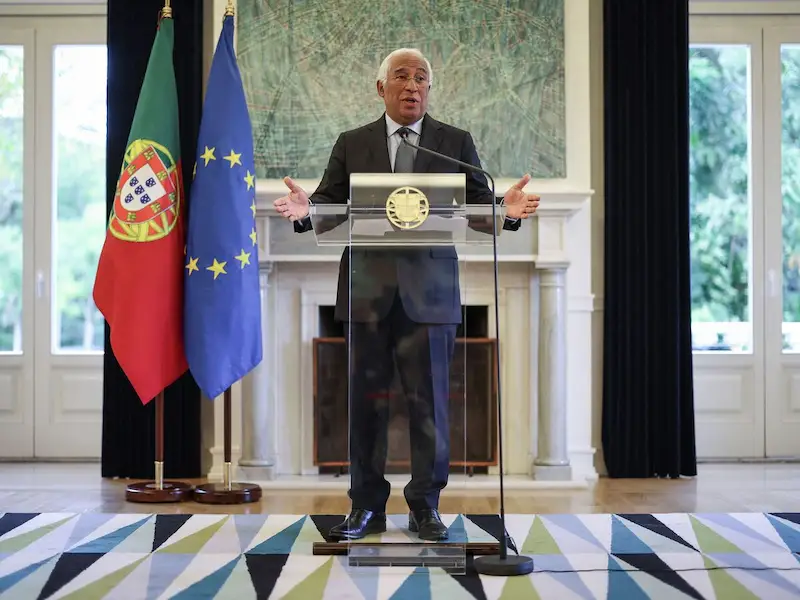


Portugal is bracing itself for a potential snap election following the unexpected resignation of Prime Minister Antonio Costa. The move comes amidst an ongoing investigation into alleged corruption involving lithium and hydrogen projects. President Marcelo Rebelo de Sousa has called for a meeting of the Council of State, an advisory body that must be consulted before dissolving parliament. He is expected to address the nation following the meeting. Meanwhile, political parties are preparing for discussions with the president on Wednesday.
The scandal surrounding the corruption probe could have a significant impact on the upcoming election. Previous controversies, such as questionable payments within state airline TAP SA, have already shaken Costa's government, leading to public outrage and ministerial resignations. Additionally, the administration has faced challenges related to rising living costs and protests by teachers. Citizens are now left to determine how these issues will shape their voting decisions.
In a recent poll, Costa's Socialists were leading with nearly 29% support, closely followed by the center-right party PSD, the largest opposition group in parliament, with a 3.7 percentage point difference. Given that parliament was dissolved in late October 2021, an early election is likely to be held within three months. The opposition leader, Luis Montenegro of the PSD, has confirmed the party's readiness for the upcoming election.
However, a change in leadership may not necessarily result in a significant shift in economic policy. With Portugal's debt ratio surpassing 100% of GDP and the memories of the eurozone debt crisis still fresh, fiscal discipline is expected to remain a core focus for any future government.
Antonio Barroso, deputy director of research at Teneo, suggests that a centrist party will likely continue to lead Portugal in the foreseeable future. Nevertheless, the formation of a new government after the election may encounter challenges. Considering the circumstances, a snap election is the most probable outcome according to President Rebelo de Sousa.
Financial markets have exhibited a relatively muted response to the political developments. The 10-year bond yield in Portugal remained largely unchanged at 3.4%. This is in stark contrast to 2012, when the country faced a peak yield of 18% during the height of the eurozone debt crisis. Portuguese stocks also experienced minimal fluctuations following a decline of 2.5% on Tuesday in the benchmark PSI index.
The prime minister's resignation came as approximately 145 police officers conducted raids on various locations, including the offices of the chief of staff and the environment and infrastructure ministries. The raids were aimed at seizing documents and other evidence related to the investigation. Vitor Escaria, the premier's chief of staff, was among the five individuals detained. The investigation focuses on possible corruption linked to lithium exploration concessions in the Romano and Barroso mines, a hydrogen production project in Sines, and a data center project, also in Sines. Infrastructure Minister Joao Galamba has been named as a person of interest by prosecutors.
Statements by the suspects alleging Costa's involvement in "unblocking" certain procedures will be evaluated by the Supreme Court of Justice. In response, Costa, 62, has stated that he has a "clear conscience" and is willing to cooperate with the investigation. However, he has clarified that he will not participate in any upcoming elections.