


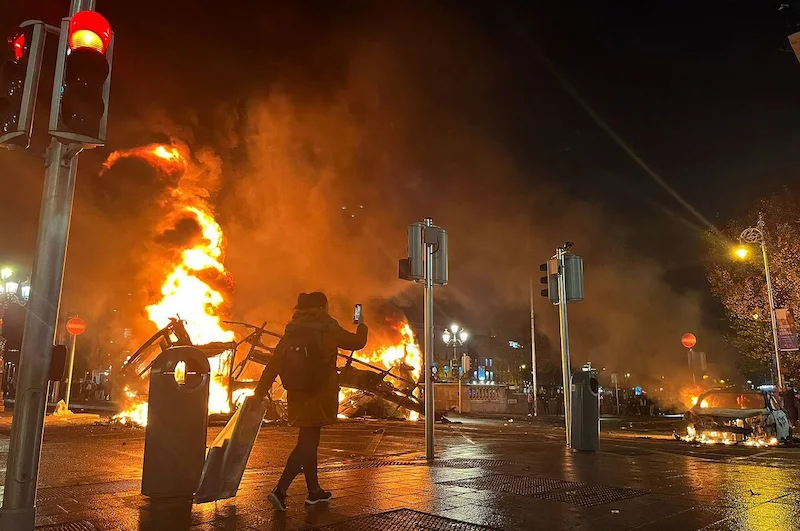


In a surprising turn of events, Ireland, known for its stable and open economy, recently experienced violent riots with an anti-immigration sentiment. The riots erupted following a stabbing attack near a busy transit route in Dublin. What is particularly striking is that Ireland had, until now, avoided the rise of a large far-right movement that many other European countries have grappled with.
The violence, fueled in part by disinformation and online rumors of a foreign attacker, exposed deeper issues plaguing the younger generation. Spiraling prices and an acute lack of affordable housing have left many young people feeling disillusioned and frustrated. The rioters harnessed these grievances to fuel their anti-immigrant agenda.
The Irish government has been left reeling in the aftermath of the riots. Justice Minister Helen McEntee narrowly survived a no-confidence vote, sparking debates about the response to the violence and the underlying causes. While opposition lawmakers have criticized the police response, some have also pointed to deeper societal problems plaguing Ireland.
Mick Barry, a lawmaker from the opposition People Before Profit-Solidarity party, highlighted the root issues during a parliamentary debate, stating that "you cannot pepper spray alienation" or "baton charge anger at social inequality." The housing crisis, the cost of living, and toxic masculinity were identified as key factors contributing to the discontent among the country's youth.
Housing and the cost of living have emerged as the top concerns among Irish citizens, according to extensive polling conducted by Kevin Cunningham, a politics lecturer at TU Dublin. The shortage of housing has resulted in skyrocketing prices in both the rental and sale markets. Even in Dublin, where prices had been falling earlier this year, the impact of higher interest rates and cost-of-living pressures became evident.
Earlier this year, Prime Minister Leo Varadkar estimated that Ireland faced a shortage of 250,000 rental properties. The average rent for new tenancies has risen by a staggering 18% above existing contracts, contributing to the growing frustration. The government has pledged to build 33,000 new homes each year from 2021 to 2030, but with the influx of refugees and asylum seekers, this plan may no longer be sufficient.
Lorcan Sirr, a housing policy analyst, emphasizes that the issue of immigration often boils down to housing. While acknowledging the need for foreign workers, the opposition uses the argument of housing scarcity to fuel anti-immigrant sentiments. The government must address the challenges that led to the riots, as stated by Deputy Prime Minister Micheal Martin. Urgency, action, and a focus on solving these issues are imperative to address the underlying concerns.
Sirr points out that a poor housing policy has been exploited by far-right groups as a reason to reject those who Ireland is morally or legally obligated to accept into the country. Social housing is the worst-hit sector, with the government failing to meet the target for new builds in this area. Instead, the focus has primarily been on the rental sector, where institutional investors enjoy favorable tax treatments on rents.
It is worth noting that the housing of refugees and asylum seekers has not directly impacted the housing sector, as most are accommodated in hotels. Nonetheless, housing remains the most important issue for voters in Ireland, even amidst debates about immigration. The government's focus must shift towards addressing the housing crisis, which serves as a breeding ground for anti-immigrant sentiments and discontent among the country's younger generation.