


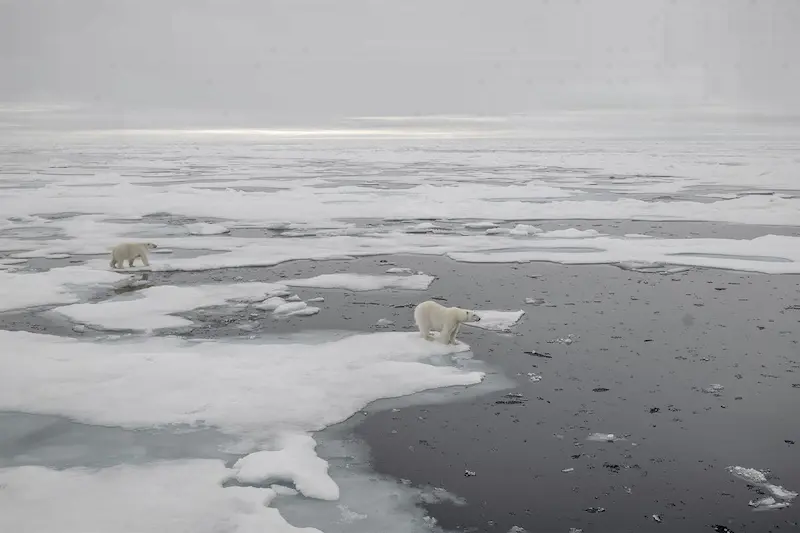


The Arctic region experienced its warmest summer on record in 2023, surpassing the previous record set in 2016, according to the recently released Arctic Report Card. The average temperature during the summer reached 6.4°C (43.5°F), half a degree higher than the previous record. This year's report highlights the continuation and, in some cases, acceleration of trends reshaping the Arctic due to human-caused climate change.
One of the most concerning trends is the reduction of sea ice. The Arctic witnessed its sixth-lowest sea ice extent since satellite records began in 1979. In fact, the 17 lowest extents of Arctic sea ice on record have occurred within the last 17 years. The shrinking sea ice not only affects the region's biodiversity and ecosystems but also amplifies global warming. As sea ice diminishes, less sunlight is reflected back into space, leading to increased warming of the planet.
Another alarming finding is the increase in Arctic temperatures. The yearly average surface air temperature in the region was 0.7°C higher than the 1991-2020 average. Since 1940, temperatures have risen by a quarter of a degree Celsius per decade. This warming trend is impacting major rivers that drain into Arctic seas, elevating their surface temperatures and leading to the melting of even more sea ice.
Moreover, the Arctic landscape is experiencing profound changes due to the loss of near-surface permafrost. Landslides and slumping caused by permafrost melt are depositing large amounts of materials into rivers, lakes, and seas. In some areas, such as the Canadian Arctic Archipelago and Western Siberia, the once-stable surface of the Earth is undergoing dramatic transformations, resembling a diseased landscape.
The report also emphasizes the greening of the Arctic. Tundra greenness reached its third-highest level in 24 years of satellite records. The early melting of sea ice creates a more moderate and maritime climate, fostering the growth of shrubs and small trees in previously lichen-covered areas. This transformation can have cascading effects on the food chain and the livelihoods of Indigenous communities reliant on wildlife such as caribou.
Additionally, the Arctic is experiencing changes in its marine ecosystems. Marine algae, including harmful algal blooms, are thriving in the region, particularly in the Eurasian Arctic and Barents Sea, due to warmer temperatures. These blooms pose threats to human and ecosystem health.
The impacts of climate change are not confined to the Arctic alone. The report highlights the interconnectedness of environmental systems, with the Arctic's warming contributing to high-impact events elsewhere. For instance, the record-breaking wildfires witnessed in Canada this summer were fueled by the longer-term warming trend and cascading environmental effects.
The Arctic Report Card stresses the critical role of Indigenous communities in mitigating climate change impacts. It also identifies areas requiring urgent research, such as subsea permafrost, which holds substantial amounts of methane and may have implications for carbon sequestration.
In conclusion, the Arctic's vital signs continue to signal a rapidly changing environment due to climate change. The record-breaking temperatures, melting sea ice, shifting landscapes, and altered ecosystems underscore the urgent need for collective action to address the drivers of Arctic transformation and mitigate its far-reaching consequences.