


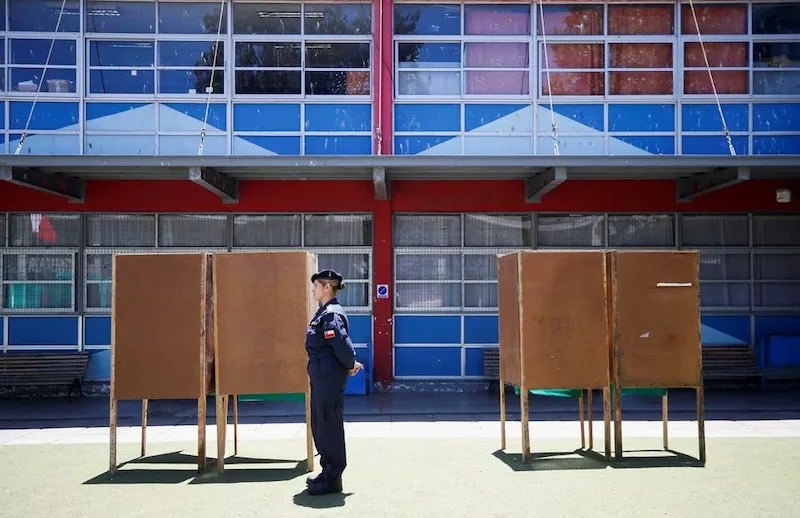


Chileans went to the polls on Sunday to decide the fate of their constitution, a document that has its roots in the Augusto Pinochet dictatorship era. This marks the second time in as many years that Chile has held a referendum to replace its current constitution. The need for change was sparked by widespread protests in 2019, which highlighted deep-rooted inequalities in the country. However, there is a growing sense of mistrust and disillusionment among the Chilean people regarding the constitutional process.
Nina Vidal, a 65-year-old secretary from Valparaiso, expressed her disappointment after casting her vote. She remarked that after the first referendum, she had sincerely hoped for change, but nothing substantial had happened. Many Chileans now question the effectiveness of the constitutional reform process.
In the initial assembly elected to draft a new constitution, left-wing forces dominated the scene. The resulting draft focused on important issues such as social welfare, indigenous rights, environmental protection, and gender equality. Unfortunately, this draft was overwhelmingly rejected by voters in September 2020. In the subsequent draft, the electorate swung towards the conservative end of the spectrum, leading to the election of an assembly dominated by conservative parties.
The new proposal on the ballot is seen as more conservative and market-friendly compared to the current constitution from 1980. It places particular emphasis on private property rights and enforces strict regulations on immigration and abortion. However, polls indicate that voters are likely to reject this proposal as well, although the margin has narrowed in recent weeks leading up to the referendum.
President Gabriel Boric, acknowledging the uncertain outcome, assured the public that his government would continue working on behalf of the people regardless of the referendum's result. However, if the new constitution is approved, it could pose challenges for Boric's progressive reforms related to tax and pensions, according to analysts.
As Chileans participated in the historic vote, they lamented the deep political polarization that has made it incredibly difficult for consensus to be reached on a replacement constitution. Architect Claudio Fernandez, 41, stated that the irreconcilable differences among Chileans prevent the country from finding a middle ground to move forward.
The polling stations opened at 8 a.m. and closed at 6 p.m., with the results expected at around 8 p.m. Regardless of the outcome, the process itself has already highlighted the challenges of rewriting a constitution in a deeply divided society. The road to establishing a new social contract that addresses the needs and aspirations of all Chileans remains complex and uncertain.