


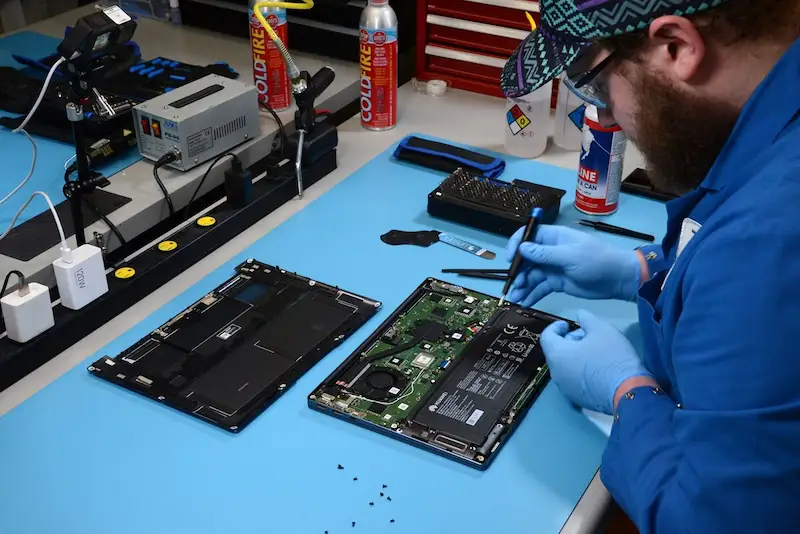


Contrary to speculation about another Chinese technological breakthrough, a teardown of Huawei Technologies Co.'s newest laptop has revealed that it runs on a chip made by Taiwan Semiconductor Manufacturing Co. (TSMC). The Qingyun L540 notebook, dissected by research firm TechInsights, contains a 5-nanometer chip manufactured by TSMC in 2020, around the time US sanctions limited Huawei's access to the chipmaker. This contradicts rumors that Huawei's Chinese chipmaking partner, Semiconductor Manufacturing International Corp. (SMIC), had achieved a major leap in fabrication technique.
Last August, Huawei made headlines by releasing a smartphone with a 7nm processor made by Shanghai-based SMIC, which seemed to defy US trade curbs. However, TechInsights' teardown of the device revealed that the chip was actually a few years behind the cutting edge. This revelation caused a stir in the Chinese tech scene and sparked a debate in the US about the efficacy of sanctions. The discovery of the TSMC-made 5nm chip in Huawei's latest laptop further dampens speculation that SMIC had achieved this milestone by developing workarounds to US sanctions.
The Mate 60 smartphone, released by Huawei in 2023, solidified the company's role as a standard-bearer for Chinese efforts to reduce dependence on Western technologies and develop domestic alternatives. Chinese consumers eagerly embraced the smartphone, helping Huawei cross the important $100 billion revenue threshold and challenging Apple's dominance in the market.
A move into 5nm territory would have represented a significant leap for Huawei, bringing it closer to the most advanced chip manufacturing processes currently used, primarily centered around 3nm nodes. Prior to the cut-off of ties with Huawei, TSMC had been supplying the company with chips as advanced as 5nm. The source of Huawei's three-year-old processor remains unclear, but it is speculated that the company has been stockpiling crucial semiconductors since US trade restrictions were imposed.
Despite being on Washington's Entity List since 2019, Huawei has invested heavily in chip research, stockpiling, and establishing a network of domestic suppliers and manufacturing partners with government support. The Qingyun L540 laptop is part of Huawei's broader expansion into mobile and computing devices, which began in 2016 when the company sought to diversify its offerings beyond networking.
The emergence of the L540 laptop coincides with Beijing's increasing push to replace foreign technology with domestic alternatives in sensitive environments. This includes mandates to stop using iPhones in the workplace and replacing computers from foreign brands such as Dell and HP. Some online retailers have even promoted the new Huawei laptop as being designed specifically to comply with China's stringent data security requirements for sensitive government agencies. Although Huawei's official site emphasizes the device's security features, it does not provide specific details on compliance with these regulations.