


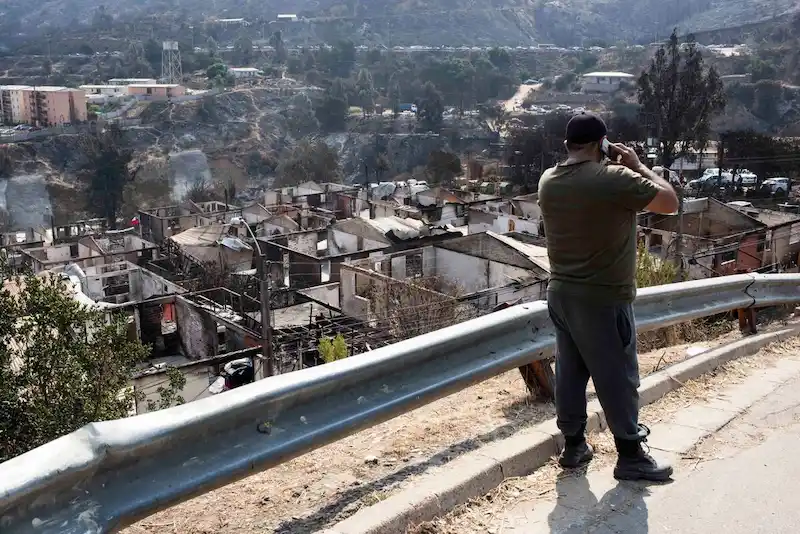


The recent devastating wildfires in Chile, which claimed the lives of at least 130 people, serve as a stark reminder of how weather and climate can exacerbate risks worldwide. According to Glory Dolphin Hammes, the CEO of Swiss-based IQAir's North American division, these fires and their associated impacts on air quality are becoming increasingly common due to climate change. The soaring temperatures, prolonged droughts, stronger El Niño events, and changing precipitation patterns attributed to climate change create the perfect conditions for the frequent and intense wildfires observed in recent years.
The fires in Chile not only caused immense destruction but also had severe consequences for air quality. Smoke from the wildfires billowed into the air, leading to a significant decrease in air quality not only in Chile but also in parts of neighboring Argentina. This smoke contains a dangerous mix of pollutants, including particulate matter, carbon monoxide, nitrogen oxides, and volatile organic compounds. Such pollution poses a grave risk to public health and can have long-term consequences for respiratory and cardiovascular systems.
These wildfires and their resultant air quality issues are not isolated incidents. Last year, massive fires ravaged Canada, leading to smoke that made its way down to New York City and the East Coast, enveloping the skies in an eerie orange hue. Similarly, ongoing fires across Africa have been severely affecting atmospheric quality. According to IQAir's tracking website, the air quality in Accra, Ghana, was labeled the worst in the world on Friday.
The situation in Chile is further compounded by extreme weather conditions. The country has been experiencing scorching heat waves, with temperatures reaching their third-highest levels in over a century. Moreover, Chile is in the midst of a multi-year megadrought, exacerbating the fire risks and making it even more challenging to control the spread.
The strong El Niño currently ongoing in the equatorial Pacific has added to the woes of Chile and the surrounding regions. The fierce winds, associated with this climatic phenomenon, have played a crucial role in the spread of both the fires and the resulting smoke. The combination of arid conditions, intense heat, and strong winds creates a perfect storm for wildfire outbreaks and exacerbates the associated risks to both human and environmental health.
In addition to Chile, other regions across the globe are grappling with similar challenges. For instance, Tropical Cyclone 12 is currently meandering through Vanuatu, east of Australia, bringing heavy rain, rough surf, and strong winds. Furthermore, forecasters are monitoring a storm that has the potential to bring substantial snowfall to the Northeast and Midwest regions of the United States next week.
These incidents illustrate the urgent need to address climate change and develop effective strategies to mitigate its associated risks. As temperatures continue to rise, droughts become more prolonged, and extreme weather events become more frequent, the threat of wildfires, air pollution, and other climate-related hazards will persist. It is essential to prioritize climate action, both on a global scale and through local initiatives, to protect our environment and safeguard human health.