


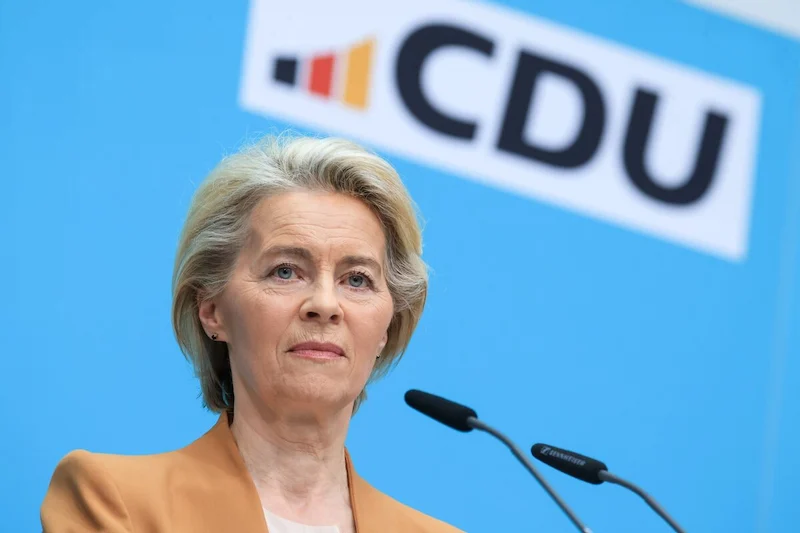


Ursula von der Leyen, the current head of the European Commission, has placed a renewed emphasis on bolstering the European Union's defense capabilities as a central theme in her campaign for a second term to lead the bloc's executive arm. This shift comes at a critical juncture for the EU, with challenges ranging from Russia's invasion of Ukraine to the looming specter of a potential return to power by former US President Donald Trump.
During a recent meeting in Berlin, von der Leyen secured the unanimous endorsement of her center-right CDU party, outlining key priorities such as enhancing the defense sector and implementing stricter controls on undocumented immigration into the EU. "We must expand Europe's defense capabilities, primarily focusing on strengthening the industrial base," von der Leyen emphasized to her party members.
As she vies for another five-year mandate, von der Leyen faces a changing political landscape within the EU, marked by the rise of far-right and populist forces ahead of the upcoming European Parliament elections. With the center-right European People's Party expected to prevail in the elections, von der Leyen is positioned as a frontrunner to retain her position at the helm of the commission. However, securing the necessary support from EU leaders and navigating the complexities of a fragmented European parliament remain formidable challenges for her re-election bid.
The Brussels-born von der Leyen, a seasoned politician and long-serving minister under German Chancellor Angela Merkel, is poised to shift her legislative focus from the Green Deal to issues of security, defense, migration, and competition in her potential second term. The EU's ambition to reduce reliance on the US military umbrella, counter Russian aggression, and address trade tensions with China underscores the significance of bolstering the bloc's defense capabilities.
Von der Leyen's proposal to appoint a dedicated commissioner for defense, as presented at the recent Munich Security Conference, indicates her commitment to driving reforms within the defense industry. Additionally, her team is crafting an economic security strategy aimed at regulating the export of dual-use goods, scrutinizing investments in critical technologies, and controlling outbound capital flows. The potential issuance of €100 billion in eurobonds to support the continent's defense industry highlights the EU's push for greater autonomy in this arena.
In the face of mounting challenges, including the implementation of the €800 billion recovery fund, the advancement of the green deal, and navigating geopolitical uncertainties surrounding the upcoming US elections, von der Leyen's second term would demand adept crisis management skills. While she is lauded for projecting a strong European image on the global stage, critics urge her to decentralize authority and engage more actively with her commissioners. As she navigates a complex political landscape and pushes for ambitious policy objectives, von der Leyen's leadership in a potential second term remains pivotal for shaping the future trajectory of the EU.