


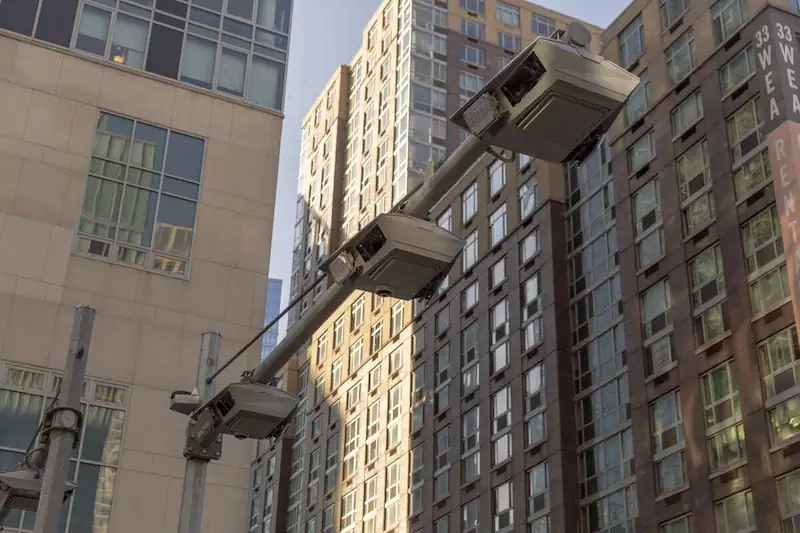


In a bold move to tackle traffic congestion and pollution while bolstering public transportation funding, New York City authorities are preparing to roll out a pioneering congestion pricing plan. This initiative, set to launch as early as June, aims to reduce the number of vehicles entering the bustling midtown Manhattan area by as much as 20%. By implementing a fee structure that affects motorists driving into the central business district, officials hope to incentivize a shift towards alternative modes of transportation, ultimately leading to clearer roads and improved air quality.
Economists hail congestion pricing as a demand-side strategy wherein higher fees discourage driving, consequently lowering traffic volume. However, finding the right balance between reducing congestion and maximizing revenue is crucial. Setting the fee too low may not achieve the desired impact on traffic flow, while setting it too high could deter too many drivers, potentially hurting revenue generation. This delicate balance highlights the challenge of implementing a system that is both financially viable and effective in reducing congestion.
While congestion pricing is a novel concept in the United States, several cities around the world have successfully implemented similar schemes. From Singapore, which introduced congestion charging back in 1975, to London, where fees have been in place since 2003, these cities have demonstrated the potential benefits of such initiatives. Stockholm's permanent congestion pricing system, established in 2007, and Milan's Area C, launched in 2012, have also served as successful models for managing urban traffic.
Under New York City's proposed congestion pricing plan, vehicles entering Manhattan's central business district—covering iconic areas such as Times Square and the Theater District—would face a daily fee. Passenger cars during peak hours would incur a charge of $15, with varying rates for vehicles without an E-ZPass transponder. Taxis and for-hire vehicles like Uber and Lyft would also be subject to lower fees per trip. These fees are designed not only to decrease traffic but also to generate an estimated $1 billion annually for the city's transit infrastructure.
While congestion pricing has garnered support from environmentalists, urban planners, and transit advocates for its potential benefits, some political figures have voiced opposition. Concerns have been raised about the impact on neighboring districts, such as Staten Island and New Jersey, where residents may face increased pollution and additional toll expenses. Legal challenges have been mounted against the plan, with calls for more extensive environmental analysis and efforts to delay or halt the implementation of the new toll system. Despite these hurdles, the potential benefits of congestion pricing in transforming New York City's transportation landscape remain a topic of ongoing debate and discourse.