


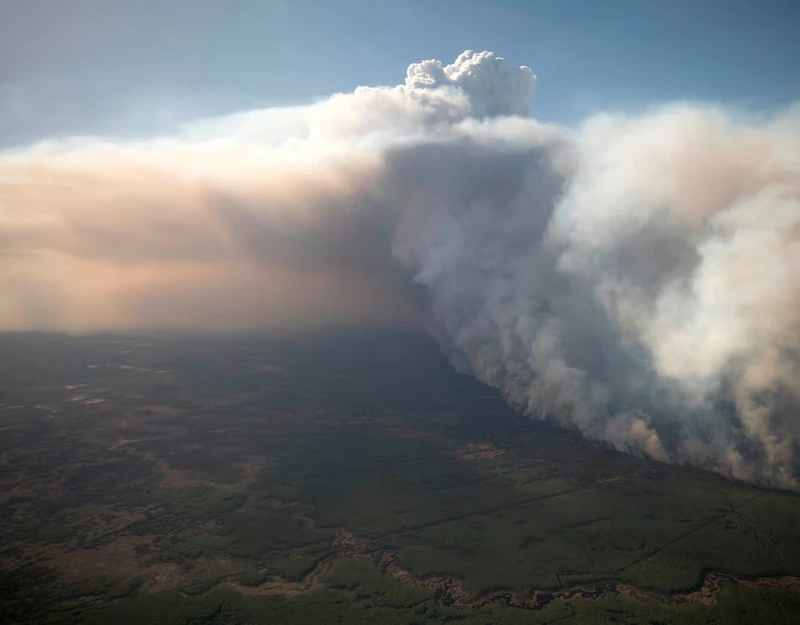


Canada is on high alert as the federal government issues a stark warning of the looming threat of yet another catastrophic wildfire season. Forecasted to be fueled by higher-than-normal temperatures expected across much of the country this spring and summer, the risk is intensified by El Nino weather conditions. Last year, the nation suffered its worst-ever fire season, with an unprecedented 6,600 wildfires scorching an area equivalent to seven times the annual average, claiming the lives of eight firefighters and displacing 230,000 individuals from their homes.
As winter transitions into spring, Canada has already experienced above-average temperatures and widespread drought, setting the stage for potentially devastating conditions in the coming months. Emergency Preparedness Minister Harjit Sajjan expressed deep concern at the temperature trends, suggesting that the wildfire season could commence earlier, last longer, and unleash more destructive force than in previous years.
Ministers emphasize the undeniable link between climate change and the escalation of extreme weather events, including wildfires, droughts, and heatwaves. Energy and Natural Resources Minister Jonathan Wilkinson highlighted the urgency to address climate change, attributing the increased frequency and intensity of wildfires to this global phenomenon. The government is taking proactive measures to mitigate risks, investing C$256 million ($187.15 million) over five years in new equipment and training programs and pledging to add 1,000 community-based wildfire fighters to the force.
In response to the escalating crisis, Canada deployed international firefighters and armed forces personnel last year to combat the raging blazes, with severe weather events resulting in over C$3.1 billion in insured damages in 2023 alone. In British Columbia, the situation remains dire as the province reports its lowest snowpack levels since 1970, a mere 63% of the normal average compared to 88% at the same time last year. Hydrologist Jonathan Boyd from the province's River Forecast Centre emphasized the worrying correlation between drought and wildfires, underscoring the unpredictable nature of the upcoming season dependent on the prevailing weather conditions this spring.