


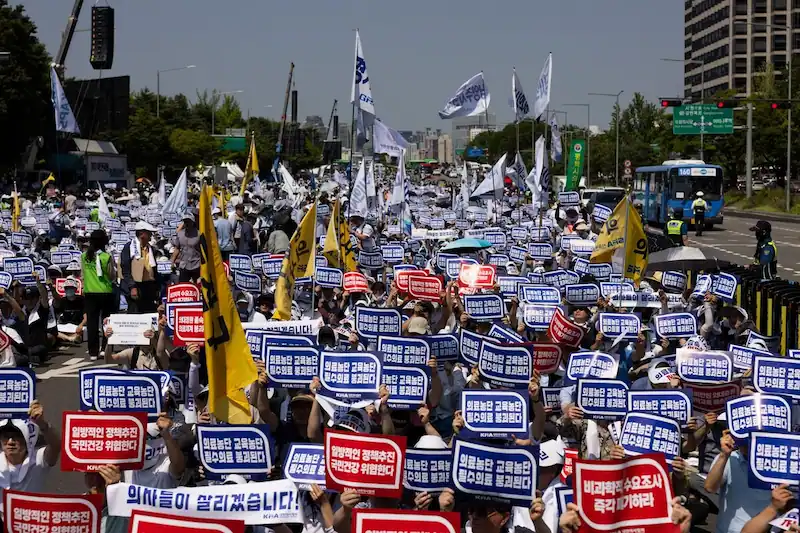


South Korea saw its largest lobby group of doctors organize a one-day nationwide strike on Tuesday, intensifying a four-month labor dispute against the government's decision to increase spots at medical schools. Approximately 10,000 doctors congregated near the parliament in Seoul, demanding the government abandon its plan to raise enrollments and requesting immunity from any punitive measures for those participating in the protest, as reported by Yonhap News.
Although medical facilities and emergency rooms remained operational, certain areas of the healthcare system experienced strain due to reduced staff numbers. The government disclosed early on Tuesday that around 4% of the 36,371 community hospitals across the nation had indicated closure as a result of the strike.
The president of the Korean Medical Association, a prominent doctors' lobbying group leading the demonstration, stated that physicians will continue the strike indefinitely beginning June 27 unless the government concedes to their demands - a proposal which has been rejected by the authorities. President Yoon Suk Yeol's administration, in response, directed community hospitals to resume operations and cautioned against illegal actions breaching the country's medical laws, including threats of repercussions.
The government's decision to augment medical school enrollments by approximately 1,500 slots next year, raising the total from 3,058 to address a severe doctor shortage, garnered support from surveys reflecting public opinion in the rapidly aging nation. Despite pushback from doctors who argue the plan fails to address core issues like the geographic maldistribution of healthcare professionals, the high concentration of doctors in urban areas, and challenges posed by the malpractice system hindering effective practice.
While the labor action persists, individuals in need of medical attention have resorted to delaying treatments, exploring telemedicine options, and visiting local clinics instead of emergency rooms. The government responded by expanding nurses' responsibilities, publicizing emergency services at military hospitals to civilians, and redeploying military doctors to civilian facilities.
South Korea, alongside Japan and other nations, maintains quotas on medical school admissions to regulate the number of physicians. President Yoon's government revised its initial quota expansion plan from an extra 2,000 seats to the current 1,500, a modification deemed insufficient by doctors' groups. The strike commenced in February with the walkout of nearly all of the country's 13,000 trainee doctors, akin to medical interns who play vital roles in surgeries and emergency care.
Several hundred doctors from leading hospital groups, including Seoul National University, initiated an indefinite strike as of Monday, ensuring that emergency rooms and critical care units remain operational, as confirmed by a hospital spokesperson. The dispute highlights broader issues around the healthcare system, including the compensation disparity for doctors compared to average wages within the Organisation for Economic Co-operation and Development (OECD) members, prompting speculation regarding the motives underlying the labor action.