


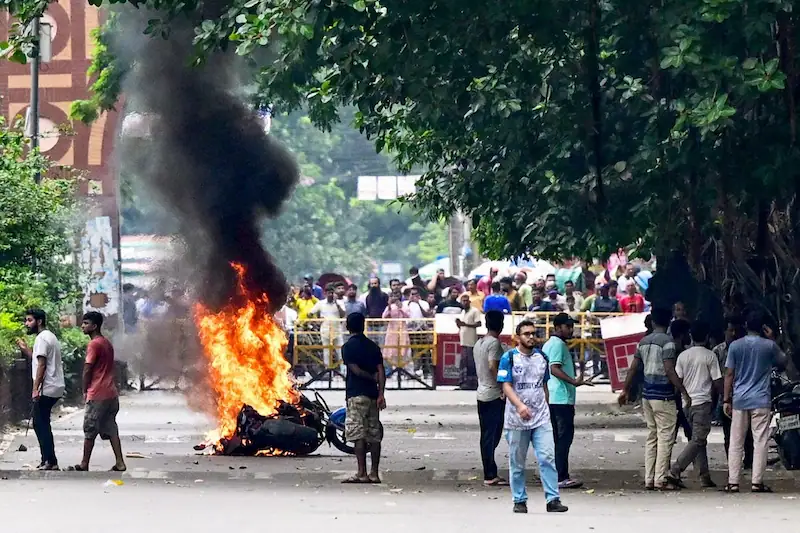


Amid escalating student protests over the government's job quota system, Bangladesh is on the brink of a complete shutdown of transport networks and businesses starting Thursday. Organizers of the protests have called for a total closure of all establishments, except for hospitals and emergency services, with a ban on all vehicles on the roads.
The demonstrations, which have grown increasingly violent, saw clashes with the police and government supporters on Tuesday resulting in six deaths and numerous injuries. The protesters are demanding the abolition of the job quota system, which reserves 30% of government jobs for family members of veterans from the 1971 war of independence.
The unrest has prompted the closure of public and private universities, while shops have been shuttered and only a few buses and rickshaws were seen on the roads in the capital. International entities, such as the US embassy and Indian High Commission, have closed their offices and visa centers, warning of the volatile situation.
Prime Minister Sheikh Hasina, facing mounting pressure, urged the students to trust the judicial process where a case against the quota system is under consideration. She also promised to investigate the violence thoroughly and punish those responsible.
In response to the protests, the government has heightened security measures across the country, deploying paramilitary troops alongside the police. The protesters, driven by concerns of favoritism and exclusion in the job market, are adamant on replacing the quota system with a merits-based one.
With the nation on edge and the economy already under strain from the pandemic, these protests pose a significant challenge for Hasina's government as it grapples with internal turmoil while seeking external financial assistance. The demonstrations have now garnered support from the main opposition party, adding further complexity to the political landscape in Bangladesh.