


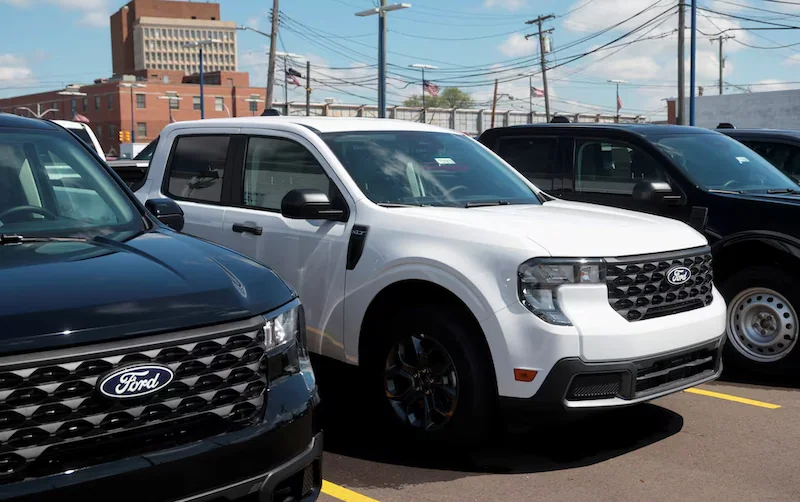


Amidst the ongoing trade war and tariff uncertainties, Ford Motor has taken the bold step of increasing prices on three of its Mexico-produced models. Effective May 2, the prices on the Mustang Mach-E electric SUV, Maverick pickup, and Bronco Sport will see hikes of up to $2,000 on select models. The move by Ford makes them one of the first major automakers to adjust sticker prices in response to President Donald Trump's tariffs.
The tariff pressures have been a major concern for the auto industry, with Ford estimating additional costs of $2.5 billion by 2025 due to the trade war. Despite this, the company aims to offset a significant portion of these costs. General Motors also projected heavy losses due to tariffs but anticipated offsetting them by at least 30%.
Ford clarified that the price increases will impact vehicles produced after May 2, with the new prices expected to reach dealer lots by late June. The company stated that the price adjustments reflect the combination of regular mid-year pricing actions and the impact of tariffs. Notably, Ford has not passed on the full cost of tariffs to customers, showing a strategic approach to managing the situation.
While Ford's shares experienced a dip following the announcement, the automaker is currently running discount programs on many models through the July 4 weekend. The uncertainty in the sector has led to disruptions as auto companies adjust forecasts, shift production, and even idle plants in response to the tariff challenges.
Despite the challenges, Ford is positioned relatively well compared to its competitors due to its strong U.S. manufacturing base. The company assembles a significant proportion of its U.S.-sold vehicles domestically, giving it an advantage in managing tariff impacts. However, even Ford faces challenges, importing popular models like the Maverick from Mexico, which will result in price increases for these models.
Import tariffs from China and South Korea further impact automakers like Ford and General Motors. The industry as a whole faces pricing pressures, particularly on vehicles produced overseas, with companies like Toyota and Hyundai among those with significant imports to the U.S. market.
As Ford takes the lead in adjusting prices in response to tariffs, other automakers are expected to follow suit. Porsche and Volkswagen's Audi have hinted at potential price hikes, while BMW anticipates a decline in U.S. car tariffs, offering a more optimistic outlook on the trade climate. GM remains cautious but stated they are not currently expecting immediate price increases, indicating the complex and shifting landscape of the automotive industry amid trade uncertainties.