


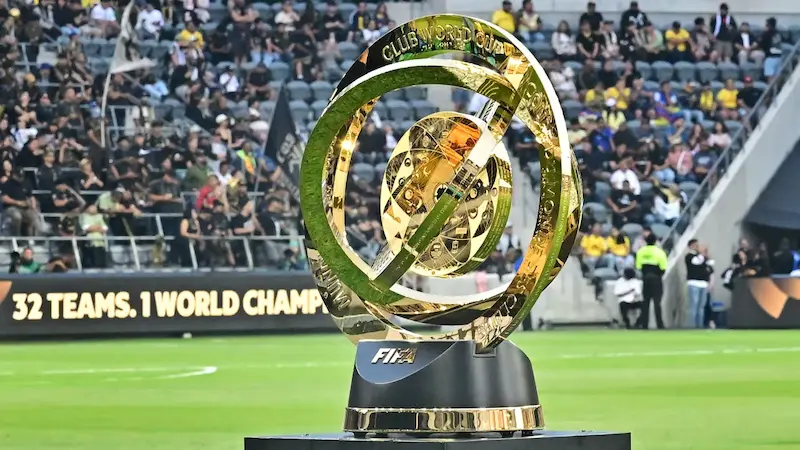


When the referee blows that opening whistle and the ball starts rolling across the turf at Miami’s Hard Rock Stadium, something new begins—not just another football match, but a genuine leap into the unknown for world soccer. The 2025 FIFA Club World Cup, spanning from June 14 to July 13, isn’t just another trophy to hoist—it’s FIFA’s loudest declaration yet that club football has gone global in a way that can’t be ignored.
This is not your old Club World Cup, the modest little competition squeezed into December with barely a ripple outside of hardcore fans. No, this one’s different. Thirty-two teams. One month. Knockouts, group stages, big cities, packed schedules, prime-time lights. The structure? It mirrors the old national team World Cups: eight groups of four, with two from each advancing into the knockout rounds. Simple on paper, but packed with potential drama.
You’ve got 12 European giants storming in with big names and even bigger wallets. Real Madrid, Bayern Munich, PSG, Chelsea, Inter Milan, the whole glittering gang. From the Americas, names like River Plate, Palmeiras, Flamengo, Boca Juniors, and Inter Miami—with a certain Lionel Messi still wearing pink—add their fire. Asia and Africa send four clubs each, with Oceania fielding its lone (and notably amateur) participant, likely there more in spirit than in strategy.
But here’s where things get messy—or interesting, depending on your point of view.
Big money, but who's watching?
According to FIFA, this thing could pump more than $21 billion into the global economy—$9.6 billion of that just in the U.S. alone. A billion-dollar prize pool is up for grabs, and the champions will walk away with up to $125 million. That’s not pocket change; that’s life-changing money for clubs outside the elite circles.
Still, you’ve got to wonder. With only days before kickoff, Ticketmaster still showed plenty of empty seats. Prices for the opening game—Inter Miami vs. Al Ahly—had dropped to $69, way down from their initial tag. Other matches followed suit: PSG vs. Atlético for $61 in LA, Boca Juniors vs. Benfica for just $41. Clearly, folks aren’t biting as hard as FIFA hoped.
Maybe it’s the prices. Maybe it’s that fans are less emotionally tied to clubs from faraway places. A nation behind a flag is one thing. A club with regional reach? Not quite the same. Not everyone can fly across the country—or the world—for a team that isn’t theirs. And with dynamic pricing fluctuating like a stock ticker, some fans might just be waiting it out for better deals.
David vs. a dozen Goliaths
It’s not news that Europe rules club football. PSG’s squad alone is valued over $1 billion. Real Madrid tops the list at $1.5 billion. Compare that to Brazil’s Botafogo ($183 million) or even Latin America’s most valuable, Palmeiras ($288 million), and the difference is staggering.
And yet, here come the dreamers—players who’ll never command headlines in London or Madrid but who’ll take the field like it's a once-in-a-lifetime shot. For fans in Buenos Aires, Montevideo, or Caracas, beating a Bayern or a Chelsea still carries that mythical weight. The odds are steep, but that’s part of the charm.
A schedule only a machine could love
Player fatigue is real. PSG’s Barcola logged over 3,600 minutes this season. Real Madrid and Man City played 50+ matches even before this tournament. Add international duty, and we’re asking the human body to do more than it probably should.
Ronaldo Nazário joked about it during the draw. “I would have loved to play in something like this… but it probably would've cost me half my vacation.” Behind the laugh, there’s truth. More games mean more injuries, shorter off-seasons, and mounting pressure. The only nod to rest? FIFA cut the third-place match. A small mercy.
And what about the best clubs missing?
Liverpool? Barcelona? Nowhere to be seen. The tournament’s qualification rules are based on past glories, not current form. Chelsea are in thanks to a 2021 Champions League win, but they’ve been drifting mid-table since. The side taking the pitch this summer is a shadow of the one that earned its ticket. Does that make sense? Maybe not. But that’s the deal.
Still, something big is starting
This tournament won’t be perfect. It’s untested, slightly chaotic, and clearly tilted toward the usual powerhouses. But it matters. A few years from now, maybe clubs will start sewing stars onto their jerseys, counting world titles like scalps. Maybe we’ll remember this as the moment club football finally grew out of Europe’s shadow and became a truly global spectacle.
Or maybe we’ll just remember it for the fireworks, the upsets, the missed chances—and Messi in pink, one last time under the Miami lights.
Either way, the ball’s rolling now. And there’s no turning back.