




German carmakers are standing at a crossroads. For decades, names like BMW, Mercedes, and Volkswagen defined what it meant to build a premium car. Precision, reliability, luxury — these were more than buzzwords, they were part of Germany’s identity. But in China, once their most promising growth market, the ground has shifted. Local players, with BYD leading the charge, have eaten into their market share at a pace that has left many in Stuttgart, Munich, and Wolfsburg rattled. And now, there’s a new front in the battle: their own backyard.
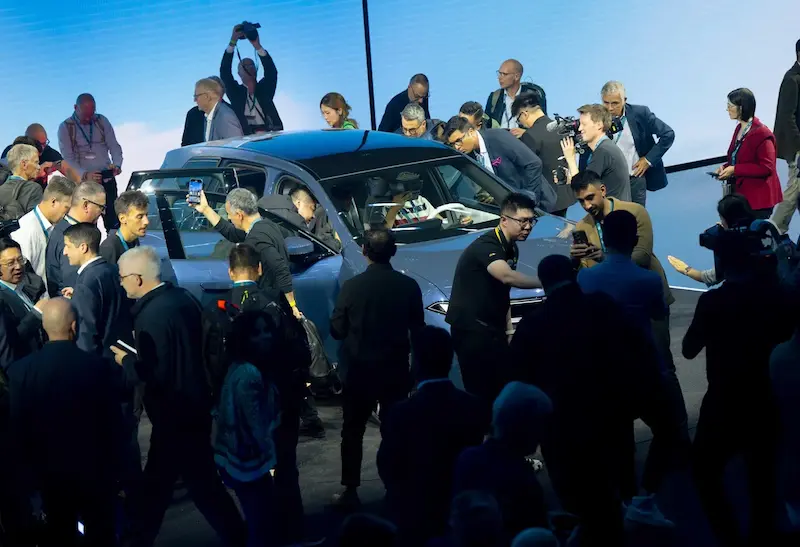
Next week, at the Munich auto show, Germany’s biggest carmakers are preparing to roll out their answers. This isn’t just another round of product launches. It feels more like a defensive stand — a signal to customers, competitors, and critics that German engineering can still carry weight in an industry where speed, software, and price seem to matter more than tradition.
The stakes could hardly be higher. Sales in Europe remain sluggish, U.S. tariffs continue to pinch, and in China the aura of the German badge no longer guarantees dominance. The fear isn’t just about losing revenue on a few models. It’s about the slow erosion of an industry that has been a symbol of national pride and economic power for more than a century. The Munich show is their chance to flip the script, to remind the world that quality and innovation aren’t measured only in battery range or price tags.
BMW is betting on the Neue Klasse, the company’s boldest shift since it redefined itself in the 1960s. The first model in the line, the iX3, carries a price tag just under €70,000 in Germany, promising more range than Tesla’s best-selling Model Y. CEO Oliver Zipse hasn’t been shy, calling it the “best overall product in the industry.” Behind the marketing bravado lies a simple truth: BMW needs this car, and the dozens of models that will follow on the same platform, to close the gap with China’s fast-moving brands. Whether the gamble pays off will depend not just on the car’s specs but on whether buyers still feel the emotional pull of driving a BMW in a world where software and affordability have become king.
Mercedes, meanwhile, is taking a slightly different approach. Instead of a radical break, it is refining what it already knows. Its new electric GLC SUV will be pitched directly against BMW’s iX3 and Tesla’s Model Y. With faster charging and greater range than Tesla’s longest-lasting model, Mercedes hopes to reassert itself in the EV race after a first wave of electric vehicles that impressed engineers but failed to excite customers. The company’s chief, Ola Källenius, has staked his strategy on a new architecture that will also underpin electric C-Class and E-Class models, a nod to the bread-and-butter cars that built Mercedes’ reputation.
Volkswagen, long the people’s carmaker, is aiming for a different prize: affordability. The company is preparing a new generation of compact EVs designed to sell for less than €25,000 — a figure aimed squarely at slowing the Chinese advance. On display in Munich will be the ID. Cross concept, set for production in 2026, alongside a camouflaged ID. Polo that will arrive sooner. For VW, the challenge is not just to fend off Chinese imports but also to convince European households that an electric car can be both practical and affordable.
But the Munich show is not just a stage for the Germans. Chinese automakers are arriving in force, eager to showcase what they can offer. BYD, Xpeng, Leapmotor, Chery, and others will use the event to cement their ambitions in Europe, where their sales are already climbing. BYD’s Seal 06 DM-i Touring wagon is being positioned as a direct competitor to Volkswagen’s Passat, a model that for decades defined middle-class motoring in Germany. The symbolism is hard to miss.
Competition is spilling beyond exhibition halls and into record books. Mercedes recently celebrated an endurance milestone with its AMG GT XX concept, running eight days straight at Italy’s Nardò track. Yet almost immediately, BYD responded with its Yangwang U9 Track Edition, which set a blistering EV speed record of over 470 kilometers per hour on a track in Volkswagen’s home state. The back-and-forth feels less like product launches and more like an escalating arms race.
For Germany’s automakers, Munich is more than a trade fair. It’s a line in the sand. Their rivals are cheaper, faster, and in many cases more advanced in software — but the Germans still believe they can set the standard. Whether customers agree will determine not only the fate of individual models, but the future of one of the country’s defining industries.