


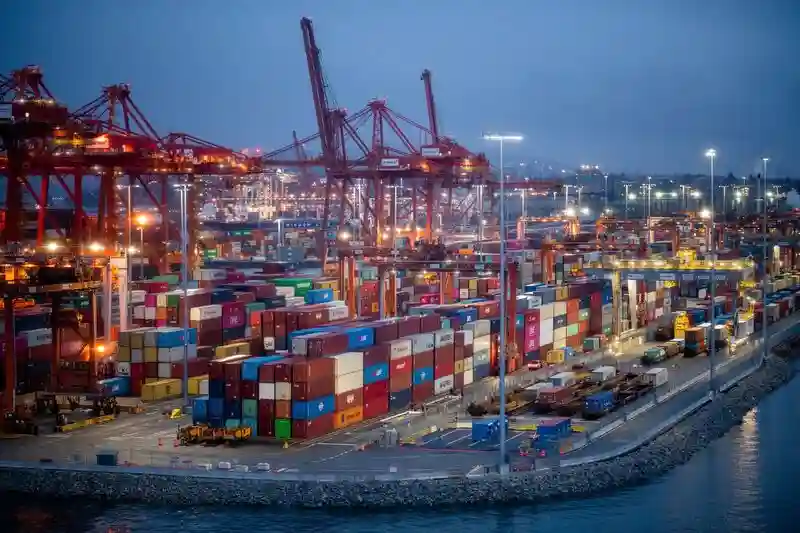


A strike by dockworkers at Pacific coast ports in Canada is set to disrupt trade and add inflationary pressures to the country's economy. On Saturday morning, more than 7,000 members of the International Longshore and Warehouse Union went on strike after failed negotiations with employers. The strike is expected to affect operations at major maritime hubs in British Columbia, including the Port of Vancouver and Port of Prince Rupert, which are crucial for both imports and exports of natural resources, raw materials, and food products.
The workers are demanding to recoup lost purchasing power they have experienced over the past two years. This work stoppage is not only increasing wage pressures but also disrupting supply chains, driving up costs for businesses and ultimately raising prices for consumers. The consequences could have a negative impact on the overall economy and hinder efforts to cool down inflation.
These western Canadian ports handle around a quarter of the country's total traded goods, with cargo worth more than C$800 million ($604 million) flowing through them every day. As a result, the ripple effect of the strike will be felt throughout the entire economy. Robin Guy, Vice President of the Canadian Chamber of Commerce, stated that practically all Canadian industries rely on these ports to move their products, which further emphasizes the potential inflationary impact.
The longer the strike persists, the more severe the consequences will be for the economy. During a strike at the Port of Montreal in 2021, which is the country's second-largest port, daily losses reached up to C$25 million. This current strike is expected to have an even larger impact due to the scale of disruptions involved.
Labor negotiations with dockworkers are historically challenging, often resulting in service disruptions that significantly impact supply chains and delivery schedules. Omar Allam, a global trade adviser and former Canadian trade official, highlights the leverage that dockworkers have in such negotiations. He emphasizes the need for a quick resolution as the strike could have serious ramifications for trade and the stability of the ports.
The International Longshore and Warehouse Union and the British Columbia Maritime Employers Association, representing waterfront companies and terminal operators, have been engaged in contract renewal talks since February. The previous collective agreement expired on March 31. The association expressed readiness to resume negotiations through the federal mediation process in order to reach a fair and balanced deal that would keep the ports stable and allow goods to continue flowing for Canadians.