


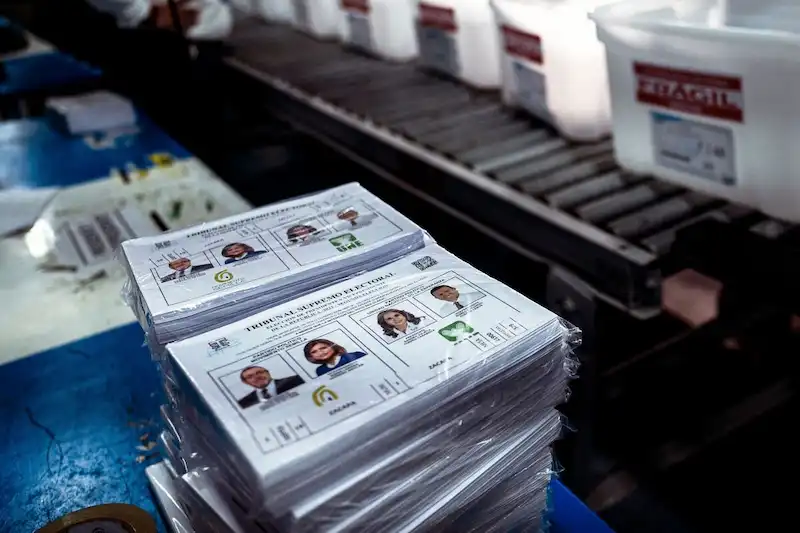


Guatemalans took to the polls on Sunday to vote for their next president amidst a highly contentious and controversial election campaign. The campaign was overshadowed by prosecutor raids on the electoral authority and criticism from the United States government. Leading the race is anti-corruption campaigner Bernardo Arévalo, who defied the polls in the first round of voting in June to secure a spot in the runoff. His opponent is former first lady Sandra Torres, who focused her campaign on increasing welfare spending for the country's poor.
Arévalo, aged 64, has withstood numerous attempts to disqualify his party and overturn the election result, prompting concerns from US officials about the state of democracy in Guatemala. As the son of a former president, Arévalo has made promises to establish a special cabinet to combat corruption and enhance oversight of government spending in the largest economy in Central America. Recent polls indicate a significant lead for Arévalo over Torres.
Since reaching the runoff, Arévalo has faced investigations by prosecutors alleging that his political party, Movimiento Semilla, engaged in forged signatures and money laundering during its formation. A lower court previously ordered the suspension of the party in July, but this decision was later overturned by the country's top judges. Arévalo attributes these challenges to corrupt officials who feel threatened by his anti-corruption stance.
Luis Almagro, Secretary General of the Organization of American States (OAS), expressed concerns about Guatemala's democratic institutions but received assurances from President Alejandro Giammattei that a peaceful transition of power would take place regardless of the election outcome. However, ongoing investigations and potential legal actions against Arévalo's party could potentially hinder his ability to govern if elected.
Arévalo's economic advisor, Jonathan Menkos, outlined his plans for a future administration, including doubling public investment to 1% of GDP for infrastructure development and seeking an investment grade credit rating within two years by improving the rule of law. Meanwhile, Torres has promised cash transfers to single mothers and food assistance for the poorest families, with plans to tackle crime by adopting strategies employed in neighboring El Salvador.
The winner of the election will be sworn in on January 14th. The ongoing investigations into Arévalo's party could impact his ability to govern effectively if elected, while Torres' administration would also aim for an investment grade credit rating and tax cuts. Despite the controversies surrounding the election, Guatemala's fiscal deficit is expected to gradually widen in the coming years, but analysts believe that the next administration will maintain the country's low debt levels and macroeconomic stability.
Polling stations opened at 7 a.m. local time and closed at 6 p.m., with the results determining the future leadership of Guatemala.