


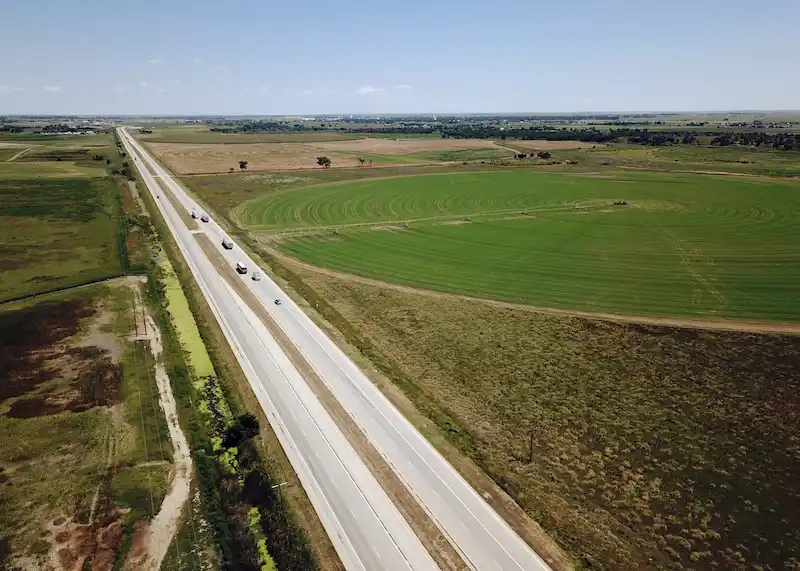


Journeying along Route 50, also known as the "Loneliest Road in America," has become easier for electric vehicle (EV) drivers. Stretching from Sacramento, California to Ocean City, Maryland, the historic highway has been equipped with a network of high-speed electric vehicle chargers, making it possible for EV owners to traverse the entire route using only public fast chargers.
The addition of these chargers has attracted a steady stream of travelers to previously isolated areas like Lamar, Colorado. The small town's visitor center, home to the new chargers, has seen an influx of EV drivers who would otherwise bypass the area for more heavily trafficked interstates. The increasing availability of charging infrastructure is in line with President Joe Biden's goal of having 50% of new cars in the US running on batteries by 2025.
Currently, there are around 4,800 public fast-charging stations in the US, and more than a quarter of these have been installed in the past year alone. The expansion of the charging network is supported by subsidies from utilities, state governments, and tax rebates for consumers. As a result, EV adoption rates have risen, with electric cars accounting for 6.5% of new car purchases in the first half of this year, compared to 2.5% two years ago.
Although the charging infrastructure is growing, there are still challenges to overcome. Making rural charging stations financially viable can be a struggle, as these locations may not see constant use. Charging companies are exploring creative business models to address this issue, such as partnering with retailers and other destinations eager to attract EV drivers. Retailers like Kum & Go, a convenience store chain, have started installing chargers at their locations, recognizing the potential to attract customers and gain a competitive edge.
To further expand the charging network, President Biden's $5 billion plan to build fast-charging stations every 50 miles along interstates and highways is on the horizon. The first stations are expected to be operational as early as next year. However, connecting some remote regions will still require substantial investment, as electron deserts, such as the 600-mile stretch between Whitefish, Montana, and Williston, North Dakota, remain without adequate charging infrastructure.
In the meantime, efforts continue to bridge the gap between different charging networks. A deal was struck between the Biden administration and Tesla to open up parts of the Supercharger network to other EV models, while other automakers are also adapting their vehicles to use the North American charging standard. This will improve convenience and accessibility for EV drivers, making long-distance journeys even more feasible.
As the network of charging stations expands and EV adoption continues to rise, the goal of providing comprehensive charging coverage across the country becomes increasingly achievable. The Loneliest Road in America serves as a symbol of the progress made in connecting previously isolated areas and supporting the growing number of electric vehicles on the road.