




In the small village of Agia Paraskevi, located on the outskirts of Athens, Greece, a heartbreaking scene unfolds. A woman stands in front of her burned-down home, tears streaming down her face as she mourns the loss of everything she held dear. The wildfires that have swept through the country this year are more devastating than ever before.
Earlier, we had spoken to Nikos, a resident of the village, as he anxiously watched the approaching smoke. Despite his valiant efforts to defend his home by spraying water around the area, he knew deep down that it might not be enough. Reluctantly, with tears in his eyes, he packed a bag and left, as the authorities forced the evacuation of the village. His home, like so many others, left vulnerable to the merciless flames.
The area affected by these wildfires is Mount Panitha, a sprawling 300-square-mile national park known as "the lungs of Athens." The park not only provides sanctuary to city dwellers seeking respite from the scorching summers but also plays a crucial role in purifying the polluted air and absorbing the intense heat that engulfs the metropolis.
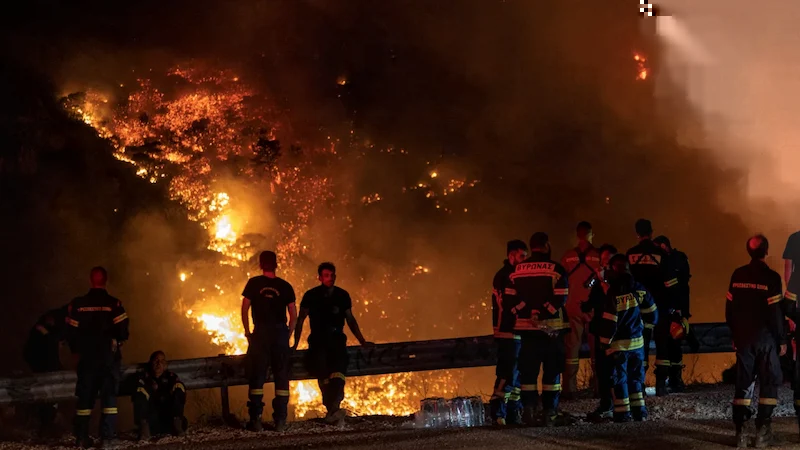
Now, however, this once tranquil haven has become a battleground. Emergency services tirelessly combat over 200 wildfires that have ignited in Greece since Monday alone. The air is filled with smoke, sirens, and the cries of villagers and rescue workers, as helicopters hover above, valiantly attempting to extinguish the flames during daylight hours. But when night falls, the helicopters retreat, leaving the relentless heat and unrelenting fires to rage on.
One of the invisible adversaries in this battle is the wind, which easily ignites small sparks and relentlessly drives the fires forward, devouring fresh ground. The unpredictable nature of the wind makes it an ever-present danger for the firefighters. Just when we thought we were safe, a small fire nearby suddenly erupted into a ferocious blaze, forcing us to flee.
With fires raging across Greece simultaneously, the available number of firefighters is simply insufficient to combat this widespread destruction. The burned remains of 18 people were tragically discovered in a shack close to the Dadia Forest—these fires have earned the dubious distinction of being the largest on record in the European Union.
The impact of these wildfires extends far beyond the charred forests and destroyed homes. The immediate effects are palpable, with the acrid smoke stinging eyes and scratching throats. The loss of these forests also increases the risk of flooding and landslides. The natural air purification and temperature moderation provided by the forests are lost, exacerbating the local impacts of climate change. The new normal in Greece, according to Dr. Michalis Diakakis, a geology and geo-environment expert, is extreme heat.
After four days since the fire first started, Parnitha, a once thriving carbon sink, still burns. Its lush forests have been decimated, leaving barren landscapes and billowing plumes of ash and carbon. Even residents 50 kilometers away are struggling to keep their surroundings clean, as the ash settles on everything, requiring constant clean-up.
Ironically, alongside the wind, another ally to the flames is emerging — deliberate arson. Shockingly, there have been 79 arrests related to arson so far, leaving many Greeks bewildered and outraged. Dr. Diakakis questions the motives behind these acts, struggling to believe that it is simply a matter of arsonists at work.
Despite the devastation that surrounds the villages and communities affected by these wildfires, there are occasional glimmers of hope. Nikos' house, miraculously, still stands amidst the charred ruins. Its last line of defense, a ring of water, managed to protect the little home. It is a small victory, but the battle against the wildfires in Greece requires much more than a few drops of water. It demands a united effort, resources, and a commitment to preventing and mitigating such disasters in the future.