




2023 witnessed a series of alarming climate records, solidifying the fact that life on Earth is facing an unprecedented crisis. A special report published in the journal Bioscience sheds light on the dire state of the planet. "Life on planet Earth is under siege," warns William Ripple, a prominent ecology professor at Oregon State University and lead author of the report. The comprehensive analysis, called the "State of the Climate," aims to provide a concise overview of the impacts of global warming experienced in the past year and potential mitigation strategies.
One of the most striking findings of the report is the extraordinary heat experienced in 2023. Before the year 2000, the global average daily temperature never exceeded 1.5°C (2.7°F) above pre-industrial levels. However, since the turn of the millennium, temperatures have sporadically surpassed this threshold. By September 12, a record-breaking 38 days had already exceeded the daily average temperature of 1.5°C, surpassing any other year in history.
The significance of the 1.5°C limit lies in the 2015 Paris Agreement, where countries pledged to keep global temperature increases well below 2°C and strive to limit them to 1.5°C. Currently, the world has warmed by approximately 1.2°C. Research indicates that the difference between 1.5°C and 2°C of warming is substantial. At 1.5°C, there may still be some remnants of coral reefs and summer ice in the Arctic. However, at 2°C, both could disappear entirely.
According to Ripple, "Every 1/10th of a degree of warming that we can avoid can save a huge amount of suffering and will save many, many lives." The 38 days that exceeded 1.5°C in 2023 are part of a broader trend of record-breaking temperatures observed on land and in the ocean. This year's June and July were the warmest in recorded history. Not only was July the hottest month in over 170 years, but it is also likely to be the hottest month in more than 100,000 years.
While the El Niño phenomenon, known for causing warmer weather, often explains increased temperatures, it falls short in explaining the extreme warming witnessed in 2023. Zeke Hausfather, a research scientist at Berkeley Earth, suggests that either this El Niño is behaving differently compared to previous ones, or other factors are contributing to the record-breaking warmth experienced this year.
Scientists have been exploring potential causes, such as an uptick in the 11-year solar cycle and a volcanic eruption in Tonga last year, which released an unusual amount of water vapor, another greenhouse gas, into the atmosphere. Although these factors contribute somewhat to warming, there remains a gap between what is expected from El Niño and the underlying warming. As Hausfather states, "The world is much warmer than expected, and we're not sure why."
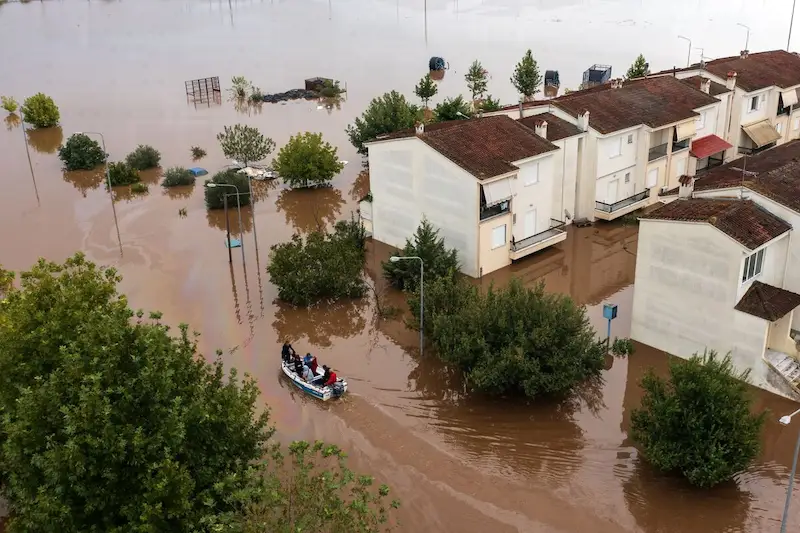
As temperatures rise, so does the frequency of natural disasters. The report elaborates on a series of calamities, including the Canadian wildfires, tropical cyclones in Myanmar, and heavy rainfall in Japan and India that led to landslides, floods, and tragic loss of life. Compounding disasters are becoming more common due to climate change. For example, a drought followed by intense rainfall can exacerbate risks, as the dry ground is less capable of absorbing moisture, leading to landslides and floods.
Despite the escalating impacts of climate change, efforts to combat it are falling behind. Greenhouse gas emissions are on the rise, primarily due to increased coal usage in countries like China and India. Additionally, Russia's invasion of Ukraine has prompted some European nations to expedite their transition to renewable energy sources, while others have resorted to increasing coal usage.
The report also emphasizes the issue of equity in greenhouse gas emissions. Ripple highlights that the Global South is more vulnerable to climate change, stating, "That's a climate justice issue because most of the historical emissions have come from the Global North."
In conclusion, the State of the Climate report for 2023 paints a grim picture of our planet. With record-breaking temperatures, compounding disasters, and insufficient actions to combat climate change, urgent and equitable action is needed to address the impending crisis. The world must collectively strive to reduce greenhouse gas emissions and limit global warming to protect both human lives and the fragile ecosystems that sustain us.