


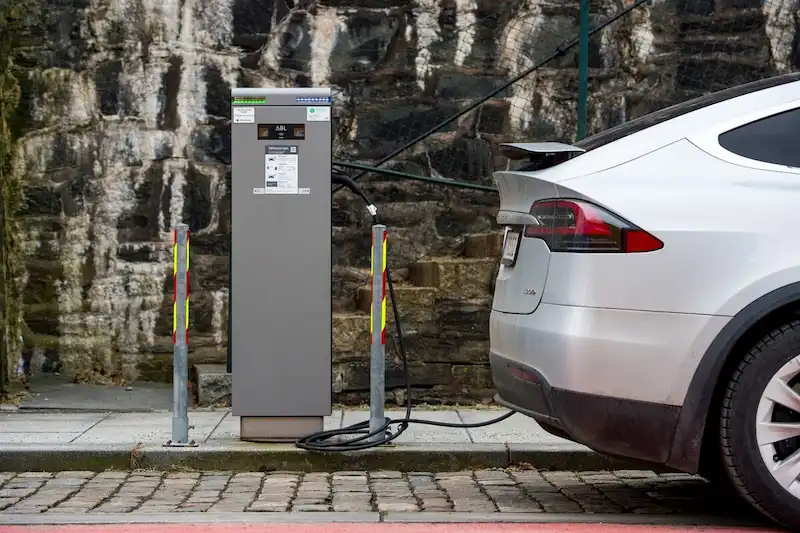


Norway, often hailed as a global pioneer in adopting electric vehicles (EVs), may struggle to meet its ambitious goal of having all new cars sold be emission-free by 2025. This warning comes as the country's government continues to roll back the incentives and measures that initially sparked the nation's electric car revolution. Oyvind Solberg Thorsen, the director of the Norwegian Road Federation (OFV), revealed that instead of reaching the 100% target, EVs might make up only around 90% of all new car sales by the end of next year.
Norway has already achieved significant success in promoting EV adoption, with roughly one in five cars on its roads being electric. This remarkable achievement is mainly attributed to a range of incentives, including reduced taxes on new EV purchases. In fact, in 2020, Norway made history as the first country where electric cars surpassed traditional fossil-fuel vehicles in new vehicle registrations. However, it is crucial to note that the nation's aspiration for emission-free cars by 2025 does not imply an outright ban on fossil-fuel vehicle sales.
According to Thorsen, the recent scaling back of incentives for electric cars priced above 500,000 kroner ($44,700) has impacted Norway's car sales for 2023. In addition, the tax advantage associated with EVs being used as company cars has also been eliminated. As a result, the market share of EVs in new car sales for 2023 currently stands at 83.5%, significantly lower than previous years.
Thorsen voiced concerns that if more electric car incentives are removed and fees are increased, reaching the 100% target by 2025 will become increasingly challenging. He emphasized that it is the cumulative effect of all the advantages, such as tax reductions and financial incentives, that has led to Norway's high electric car penetration thus far. The removal of these incentives could potentially slow down the country's progress towards achieving its emission-free transportation goals.
While Norway's remarkable success in EV adoption serves as an inspiration for other countries, it also highlights the importance of sustained government support and incentives to foster a transition to electric mobility. The Norwegian government will need to carefully consider the long-term effects of removing incentives and ensure that appropriate measures are in place to maintain momentum in the electric car market.
However, despite the potential setback, Norway's continued commitment to electric mobility is evident. The country recently announced plans to invest in building more charging stations to address the growing demand for EV infrastructure. This, coupled with Norway's strong renewable energy sector, further reinforces its dedication to a greener transportation future.
In conclusion, while Norway's goal of having all new cars sold as emission-free by 2025 may be at risk, the nation's remarkable progress in promoting electric vehicles cannot be overlooked. The government's decision to scale back incentives and remove certain advantages for EV purchases has had a noticeable impact on sales in 2023. However, the high market share of EVs and the country's commitment to expanding charging infrastructure indicate that Norway remains a trailblazer in the transition to electric mobility, even if the 2025 target becomes slightly delayed.