


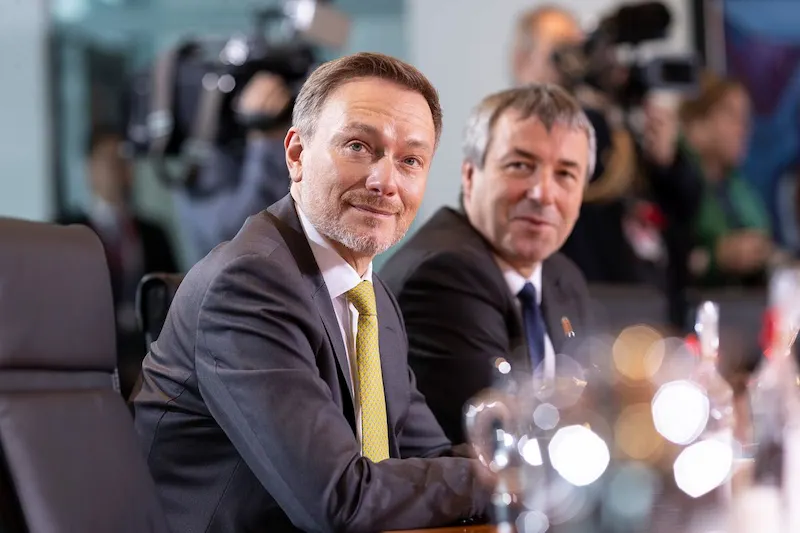


German Finance Minister Christian Lindner is facing a budget crisis at home that is hindering his ability to strike a compromise over European Union fiscal rules in Brussels, according to sources familiar with the matter. As the coalition in Berlin continues to struggle in agreeing on public-finance plans for 2024, Lindner is unlikely to make significant concessions during talks with other national counterparts this week.
Lindner finds himself in a difficult position as he cannot adopt the role of a fiscal hawk in Germany's spending while compromising on what he considers to be softer EU rules than before, explain the sources. As Lindner and his fellow EU finance ministers enter the final stages of negotiating a reform of the bloc's debt and deficit limits, which have been suspended due to the pandemic and Russia's attack on Ukraine, reaching an agreement is crucial.
The Spanish presidency of the EU has submitted a proposal for discussion in Brussels, which aligns with Germany on several crucial points. According to German officials involved in the negotiations, there is a "50-50 chance" of reaching an agreement by the end of the week. However, if Lindner remains steadfast in his position against indebted countries like Italy and France, who seek a less restrictive interpretation of the rules, the matter may end up being addressed by EU heads of state in mid-December.
German Chancellor Olaf Scholz is keen to avoid this scenario as the gathering already has a multitude of other issues to resolve, as per insiders. Scholz has given Lindner the go-ahead to finalize the talks and believes there are no major hurdles remaining from the chancellery's perspective.
Nevertheless, before dealing with the Growth and Stability Pact in Brussels, Lindner must undergo tough negotiations in Berlin. On Tuesday night, the coalition failed to agree on a solution to address a €17 billion hole in the 2024 budget. Talks are ongoing, and a deal could still be reached before the meeting of EU finance chiefs commences.
The domestic budget turmoil in Germany has not gone unnoticed in Brussels. EU Budget Commissioner Johannes Hahn expressed concern last week that domestic issues were "distracting" German politicians from the bloc's support of Ukraine. Hahn stressed the importance of Germany's engagement and its responsibility as the largest economy in the EU.
Even if a budget agreement is reached in Berlin, securing an EU deal is far from certain, with France expressing concerns about certain rules being too rigid. If EU finance ministers fail to reach an agreement this week, the discussion may be escalated to leaders meeting in Brussels on December 14-15, in an attempt to break the deadlock. Ultimately, the proposal must be approved by the economic and financial affairs council and the European Parliament.
While the year-end deadline is self-imposed, French Finance Minister Bruno Le Maire has emphasized the necessity of a December deal for the EU's credibility. The old fiscal rules will be reinstated on January 1, but there is a desire to implement legislative reforms ahead of the EU parliament elections in June, thus necessitating timely agreement.