


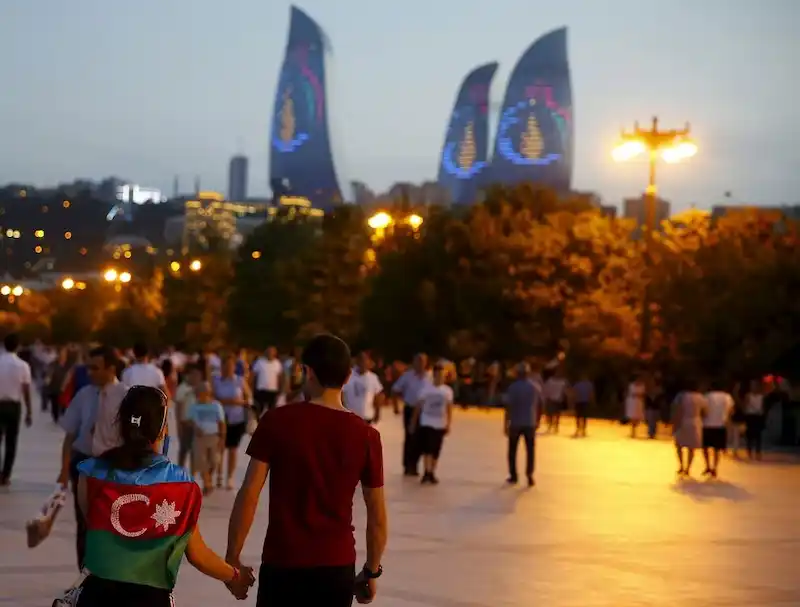


After months of geopolitical deadlock, Azerbaijan has emerged as the host for next year's COP29 climate change summit. The decision, backed by other Eastern European nations during the ongoing COP28 summit in Dubai, has drawn attention to Azerbaijan's oil production and human rights record.
With the rotating presidency of the summit moving to Eastern Europe in 2023, nations from the region rallied behind Baku's bid. Azerbaijan's Ecology Minister Mukhtar Babayev expressed gratitude for the support, particularly from the Eastern European group and the host country, the United Arab Emirates.
However, the decision has sparked concern among human rights activists. Zhala Bayramova, daughter of anti-corruption researcher Gubad Ibadoghlu, who was imprisoned in Azerbaijan for criticizing the oil and gas industry, expressed her dismay. Bayramova pointed out the risks her father took for his work and noted the irony of hosting COP29 in a country with alleged human rights abuses.
The bid faced complications due to Russia's vow to veto any European Union country's attempt to host the summit. Azerbaijan, not being an EU member, required the approval of nearly 200 countries participating in the COP28 talks. It is expected that the vote will proceed smoothly.
To secure the bid, Azerbaijan reached an agreement with its longtime adversary, Armenia, ensuring there would be no veto from the Armenian side. However, Azerbaijan's relations with some Western nations have deteriorated following its reestablishment of control over the breakaway region of Nagorno-Karabakh, which led to the displacement of ethnic Armenians.
Holding the presidency of a U.N. climate summit grants significant influence over the agenda and outcomes. The ongoing COP28 summit in the UAE, with over 90,000 registered delegates, has been the largest of its kind.
While concerns have been raised about holding the global climate talks in an oil-producing nation, Azerbaijan has plans to diversify its energy sources by incorporating more wind and solar power. The European Commission had previously signed an agreement with Azerbaijan to double its imports of Azeri natural gas as part of its strategy to reduce dependence on Russia.
The decision to host COP29 in Azerbaijan has also brought attention to the case of Gubad Ibadoghlu. He is a professor at the London School of Economics who was arrested in Azerbaijan on charges of dealing with counterfeit money and extremism. Ibadoghlu previously served as the civil society representative to the board of the Extractive Industries Transparency Initiative, an organization advocating for transparent management of natural resources. The international community, including the U.S. State Department and the EU, has condemned his arrest and called for his release.
As Azerbaijan prepares to host COP29, advocacy groups such as Publish What You Pay emphasize the country's need to address criticisms regarding freedom of speech and human rights. They argue that, as a major oil producer, Azerbaijan must listen to its critics and take steps towards more accountable and transparent governance.