


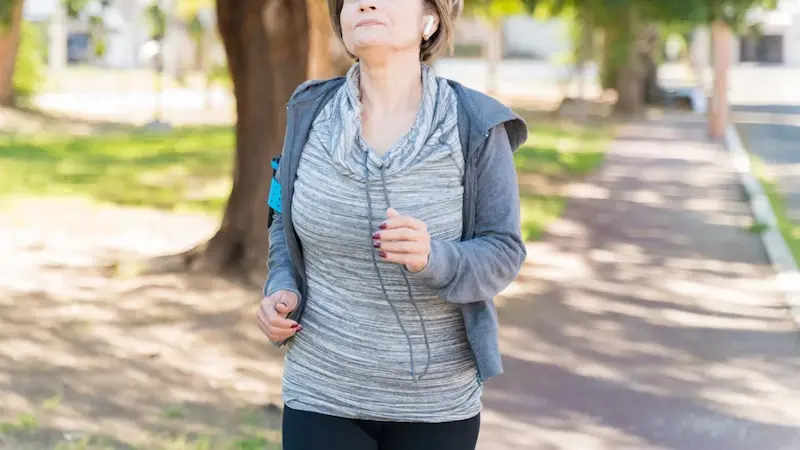


If your everyday walks have become routine, consider incorporating breath work the next time you’re getting your steps in — and reap added benefits along the way. While most people associate breath work with practices like yoga and tai chi, the truth is that you can incorporate it into something as simple as walking. Taking the time to focus on your breath while walking can help relax your mind and body, improve mood, lower blood pressure, boost energy levels, and enhance overall vitality.
Breath work has been long used by athletes to control their sympathetic response, which is the body's natural stress response. When the sympathetic nervous system is constantly activated, it can lead to burnout, exhaustion, and difficulty in sleeping. By practicing breath work, you can activate the parasympathetic response, which helps you relax and stay calm during stressful situations.
Incorporating breath work into your walking routine doesn't have to be regimented or complicated. The initial step is simply to become aware of your breath while walking. By doing so, you will naturally start to slow down your breathing and trigger a relaxation response. Once you have established this awareness, try coordinating your breath with your steps. Maintain a regular breathing pattern, such as breathing in, holding for a moment, and then exhaling. This synchronicity of movement and breath stimulates the parasympathetic nervous system, redirecting your body away from a fight or flight response.
Connecting your movements with your breath also creates an opportunity for you to become more aware of your surroundings. Nature has its own rhythm, and by slowing down and tuning into it, you can experience a sense of peace and rejuvenation. Embracing this practice is often referred to as "forest bathing," a concept popular in Japan. By immersing ourselves fully in the natural environment and being present in the moment, we can tap into the power of nature's healing energy.
When it comes to breath work, there is a debate between mouth breathing and nose breathing. Many experts advocate for nasal breathing during exercise, as it engages the diaphragm more effectively than mouth breathing and provides stability to the spine. Nasal breathing also acts as a natural filtration system for the air, moistening, warming, and filtering it before it reaches your lungs. This method may help calm your body's sympathetic response. Furthermore, incorporating breath work into your walks strengthens your breathing muscles, allowing them to sustain and perform better over time.
While there is mixed evidence on whether nasal breathing specifically dilates blood vessels more effectively than mouth breathing, targeting and training your breathing muscles can improve their strength and endurance. However, before starting any breath work exercises, it is essential to consult with your doctor, especially if you have any underlying medical conditions.
Remember that breath work is not limited to walking alone. Slow, deep meditative breathing also offers numerous benefits, such as reduced stress levels and lowered blood pressure. There are no significant downsides or side effects to breath work, so if you believe it can improve your well-being, give it a try. Incorporate breath work into your walking routine and explore the transformative power it can have on your overall health and mindset.