


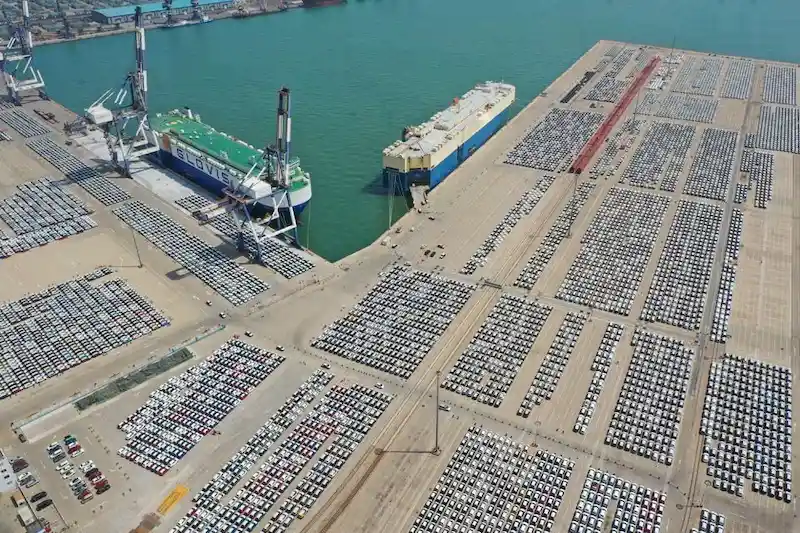


China's export industry is facing a critical challenge as prolonged factory deflation threatens the survival of smaller Chinese exporters. The relentless price wars and shrinking demand in the international market, coupled with higher interest rates abroad and rising trade protectionism, have squeezed profit margins to an alarming degree. With producer prices falling for 15 consecutive months, the industrial output and jobs of smaller exporters are now at risk, exacerbating China's economic woes that include a property crisis and debt crunch.
For Kris Lin, the owner of a lighting factory in China, the difficult choice between taking an order at a loss or telling workers not to return after the Lunar New Year highlights the dire situation facing exporters. Despite planning to restart his factory at half capacity after the holiday break, Lin recognizes the consequences of losing a client, including potential doubts about his business and negative impacts on suppliers' decisions. With approximately 180 million people employed in export-related jobs, the implications of prolonged deflation are vast.
Economists warn that fixing deflation should be a higher priority than meeting the expected growth target of around 5% this year. The vicious cycle starts with companies reducing product prices, followed by reduced staff salaries, and eventually leading to a decline in consumer demand. To exemplify the severity of the situation, profits at China's industrial firms fell 2.3% last year, adding to the already affected 4% drop in 2022. Furthermore, manufacturing activity continued to contract for the fourth consecutive month in January, with export orders shrinking for the tenth month.
The impact of sluggish exports necessitates the need for alternate measures to achieve the growth target. Analysts underscore the urgency of stimulating household consumption in order to rebalance growth. As such, analysts believe that the more the growth is rebalanced, the faster downward pressure on prices and margins will dissipate. However, China's policy focus has been directed towards the manufacturing sector, exacerbating the overcapacity issue and deflation concerns, even in booming sectors such as electric vehicles.
Smaller exporters are grappling with intensifying competition, often described as a "rat race" in industries such as automotive molds. While the central bank injects liquidity into the financial system to spur growth, smaller firms find themselves squeezed out by larger rivals and unwilling to take on loans due to the broken link between monetary policy and business financing. Private company investment, which provides a majority of urban jobs, dropped by 0.4% in 2022, while state investment rose by 6.4%.
The challenging environment has forced factory owners to consider cutting jobs, even if they are reluctant to do so. The pressure to survive in this market is intense, and some businesses are on the brink of shutting down. However, the loyalty towards workers and the understanding of their reliance on the company has prevented some owners from taking drastic measures. But the uncertainty looms, leaving many factory owners unsure of their sustainability in the coming years.
China previously faced a deflationary scare in 2015, which resulted in downsizing state-owned enterprises in primary industries to reduce supply while stimulating demand through infrastructure and property construction. This time, the surplus lies in the private sector, specifically in electronics, chemicals, and machinery manufacturing, which employ large numbers of people. Consequently, efforts to address the issue should primarily focus on boosting demand.
As China confronts the crisis in its export industry, finding solutions to the deflation problem becomes paramount. The government's role in rebalancing growth, stimulating household consumption, and addressing the challenges faced by smaller exporters will dictate the industry's trajectory in the years to come. Despite the obstacles, there is hope that the resilience and determination of Chinese exporters, coupled with effective policy measures, can overcome this challenging period and restore vitality to the sector.