


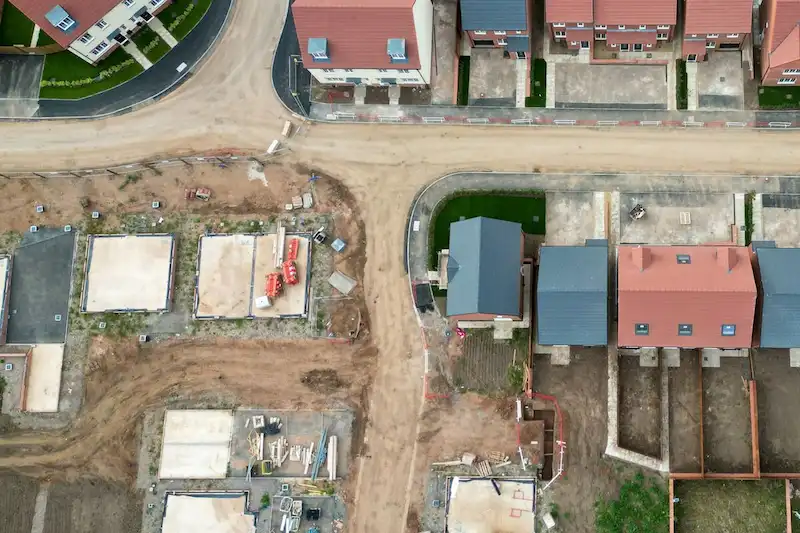


The housing crisis in the UK is poised to worsen as new data reveals a significant shortfall in the number of homes being built. Government population data and homebuilding targets from major political parties indicate a shortfall of nearly 100,000 homes per year in the next parliament, even when accounting for pent-up demand from years of missed targets. With two special elections scheduled for Thursday, the lack of affordable housing has become a focal point, intensifying the political battle.
The ruling Conservative Party had set a target of building 300,000 new homes annually, a goal they consistently fell short of before making it advisory in 2022. The Labour Party, currently leading in the polls, pledged to build 1.5 million homes over five years if elected. However, to meet the country's needs, nearly 400,000 new dwellings must be constructed each year over the next five years, accounting for stronger population growth driven mainly by immigration and the homes that would have been built if targets had been met since 2019.
Unfortunately, the number of new homes being built falls far below the targets. Government data shows an average of around 200,000 homes completed annually in the UK between 2018 and 2022. Moreover, the pipeline for new construction is constrained due to a decade of budget cuts, leaving local governments without sufficient resources to approve new homes in a timely manner.
The lack of affordable housing is taking a toll on individuals and communities. In Wellingborough, central England, a homeless man tragically lost his life after sleeping rough in freezing temperatures. The town's only homeless shelter had been closed during the pandemic, leaving vulnerable individuals with no nearby support. Mayor Valerie Anslow, a councilor from the Labour Party, expressed the town's shock and highlighted the growing number of people in temporary accommodation as a direct consequence of the lack of affordable housing.
These pressing housing issues have put the spotlight on the upcoming special elections in Wellingborough and Kingswood. While the Conservatives are expected to hold onto Wellingborough, recent victories by Labour in other by-elections have been attributed, at least in part, to their promises to boost housebuilding. Kingswood, where almost 35% of residents rent rather than own their homes, presents another battleground for the competing parties.
The housing crisis extends beyond these specific areas. In South Gloucestershire, where Kingswood is located, house prices have roughly doubled since 2005, surpassing the national average by 21%. Across the country, average home values have increased by approximately 80% over the same period. Concerns about immigration have also entered the equation, with Nigel Farage's Reform UK party fielding candidates in the by-elections.
To tackle the housing shortfall, the government will need to address the issue of resources. Freedom of Information requests conducted last year revealed a 44% decrease in average annual funding for local government planning departments since 2010, while the average number of employees in those departments has more than halved. Efforts to boost construction have been met with a mixture of skepticism and criticism from developers, who question whether there are enough staff available to expedite planning processes effectively.
In conclusion, the housing crisis in the UK shows no signs of abating, with a significant gap between the number of homes being built and the targets set by political parties. The upcoming special elections and the broader discussion surrounding affordable housing highlight the urgency of finding effective solutions to address this critical issue. Without a comprehensive strategy to provide affordable homes, the consequences of