


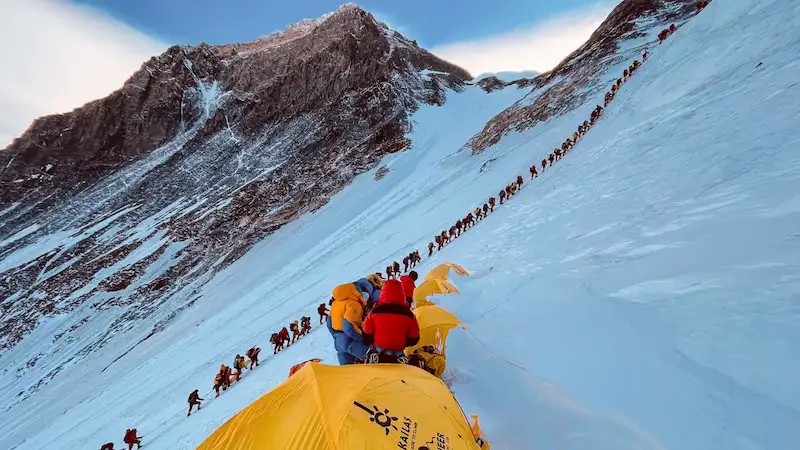


In a bid to enhance safety and efficiency on Mount Everest, Nepal has announced a new mandate that all climbers must utilize tracking chips during their ascent. The Director of Nepal's Department of Tourism, Rakesh Gurung, mentioned to CNN that while renowned companies were already employing this technology, it is now compulsory for all climbers. The implementation of tracking chips is projected to significantly decrease search and rescue times in the unfortunate event of an accident occurring on the world's highest peak.
Under this new regulation, climbers will be required to rent tracking chips for a fee ranging between $10 to $15 each, which will then be securely sewn into their jackets for the duration of their expedition. Once the climbers complete their journey and return, these chips will be carefully removed, returned to the government, and stored for subsequent users. The tracking chips function through the utilization of the global positioning system (GPS), enabling them to communicate critical information with satellites, thus aiding in swift and accurate location identification.
The manufacturing origin of these tracking chips has been revealed to be a European country by Gurung; however, no specific details regarding the manufacturer or location were disclosed. As Nepal gears up for the 2024 Mount Everest season, this new directive is poised to revolutionize the climbing experience, not only ensuring higher safety standards but also streamlining rescue operations in the mountain's challenging terrain. With Mount Everest being one of the main attractions for climbers worldwide, Nepal's move to introduce tracking chips underscores its commitment to safeguarding the lives of those venturing on this iconic peak.
Nepal, renowned for being home to eight of the world's ten highest peaks, relies significantly on mountaineering tourism for its revenue. The process of climbing Mount Everest can be an arduous two-month long journey, usually timed for mid-May when weather conditions are optimal for summiting. Climbers embarking on this expedition face substantial costs including climbing permits amounting to $11,000 per person, along with expenses for essential gear, food, supplemental oxygen, and Sherpa guides, totalling to over $35,000 per climber.
Despite the allure of conquering Mount Everest, the risks associated with climbing the imposing peak are undeniable. The Nepalese government issued a record 478 climbing permits last year, with tragically twelve climbers confirmed dead and five still officially declared missing. The dangers of rescuing mountaineers at extreme altitudes are exemplified by Gelje Sherpa, a 30-year-old Sherpa who sacrificed his own summit attempt to execute a daring rescue mission in the treacherous Everest "death zone" in 2023. The challenges of conducting rescues at such high altitudes are immense, emphasizing the critical importance of safety measures such as the mandated use of tracking chips for all Everest climbers in Nepal.