


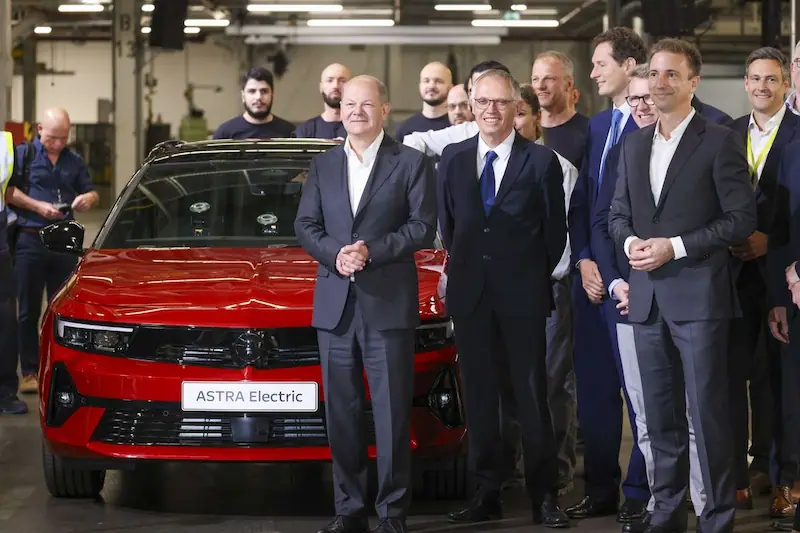


German Chancellor Olaf Scholz has raised concerns over potential restrictions on automotive trade with China, as the European Union considers imposing tariffs on Chinese electric vehicles. Speaking at an event organized by Opel in Germany, Scholz emphasized the importance of maintaining fair and open trade practices to ensure the competitiveness of Germany's auto industry.
Highlighting the benefits that Germany's car manufacturers currently enjoy from business in China, Scholz stressed the need for trade to remain unrestricted to enable German companies to compete effectively with their Chinese counterparts. He warned that isolationist measures and illegal customs barriers would only lead to increased costs and diminished economic prosperity for all parties involved.
The EU's anticipated move to impose tariffs on Chinese electric cars comes after an investigation into China's subsidies for EVs. In response, China has indicated its readiness to impose retaliatory duties on EU-made cars with larger engines, particularly affecting German brands such as Mercedes-Benz, Porsche, and BMW.
Scholz echoed industry concerns about the negative impact of escalating trade tensions, highlighting the potential for increased inflation and a setback in the transition to a more sustainable economy. Emphasizing the importance of continuing the shift towards battery-powered vehicles, he emphasized the need for the industry to embrace progress and innovation to remain competitive in the evolving automotive landscape.
As EV sales in Europe experience a slowdown, major automakers like Volkswagen AG and Mercedes-Benz Group AG are adjusting their strategies accordingly. Scholz's remarks underscored the urgency of prioritizing innovation and adaptation to avoid falling behind global competitors.
In conclusion, Scholz cautioned against skepticism towards progress and urged the automotive industry to embrace transformation for long-term sustainability. He emphasized that failing to pursue innovation could result in other countries overtaking Germany in the race towards a cleaner and more competitive automotive sector.