


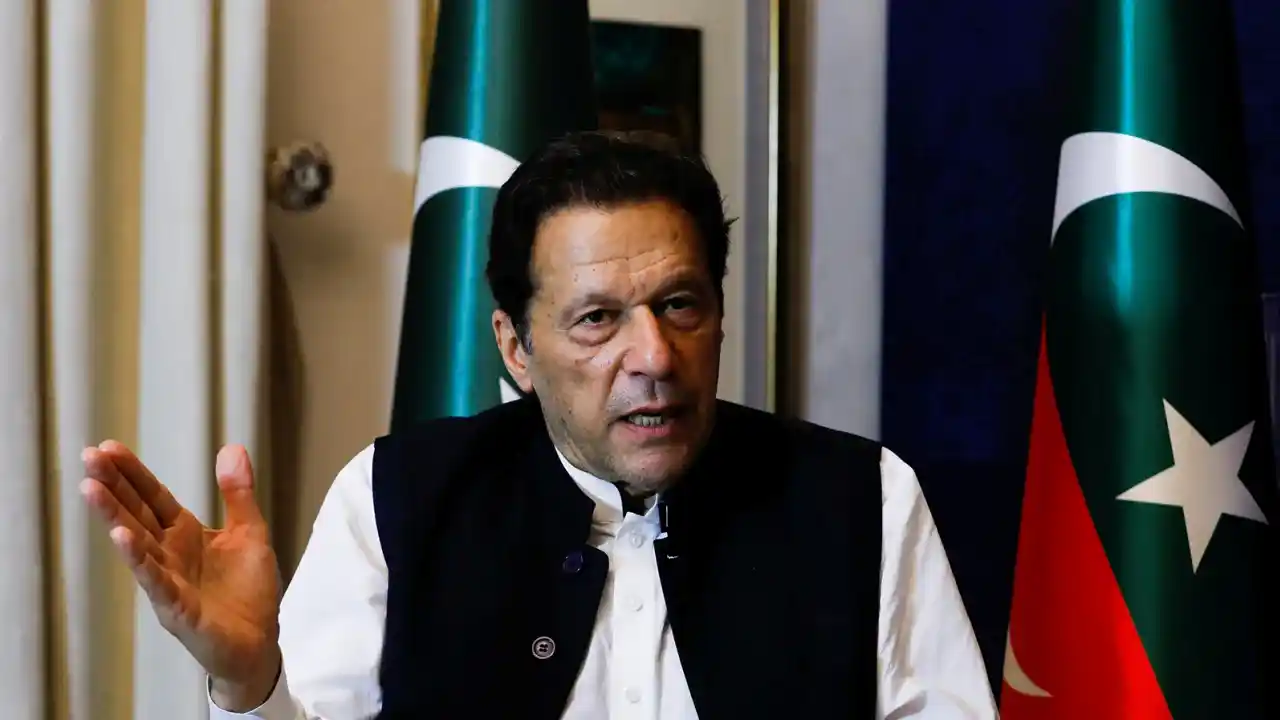


Pakistan's Supreme Court has declared the arrest of former Prime Minister Imran Khan to be unlawful, just two days after his detention had sparked nationwide protests and violent clashes. Khan was arrested on corruption charges by paramilitary troops on Tuesday in a sudden operation that saw officers smash their way into a courthouse in the capital Islamabad to detain him.
Khan was then held in a guesthouse inside police headquarters where he appeared for a special hearing in front of a judge behind closed doors on Wednesday before being remanded in custody for eight days for a charge brought by Pakistan's anti-corruption agency. Khan's lawyers had petitioned against judicial proceedings against their client taking place in police headquarters instead of a courthouse.
Police had justified the move, saying it was to keep Khan away from the public to maintain law and order. However, his supporters believed that the arrest was politically motivated. Following his arrest, eight people died and hundreds have been arrested as protests between his supporters and army supporters turned violent.
The former PM is accused of illegally acquiring land to construct a university and has also been charged in a separate case for unlawfully selling gifts sent to him by foreign leaders while in office. In a pre-recorded statement released on YouTube by Khan's Pakistan Tehreek-e-Insaf (PTI) political party after his arrest, the former prime minister said he was "detained on incorrect charges" and urged his supporters "to come and struggle for your rights."
Khan's arrest escalated what was already a tense showdown between the military and his supporters that had been simmering for months. The largest protests took place in the cities of Lahore and Peshawar, both political strongholds for Khan, and saw crowds clash with security forces. Hundreds of protesters stormed the headquarters of the national broadcaster Radio Pakistan in Peshawar, setting the building on fire.
More than 300 people have been injured, according to officials. At least 650 people were also detained in the province of Khyber Pakhunkhwa. Police said nearly 1,000 Khan supporters had been arrested in the country's most populous Punjab province. Private schools were ordered shut nationwide, with certain countries, including the United States, issuing travel advisories. The government blocked mobile internet services in a bid to quell the chaos, disrupting access to Twitter, Facebook and YouTube. Popular apps and digital payment systems have also been disrupted.
Khan's detention has highlighted the ongoing political turmoil in Pakistan, where corruption and political influence are pervasive. The Supreme Court's ruling is a significant step towards ensuring justice and upholding the rule of law in the country.