


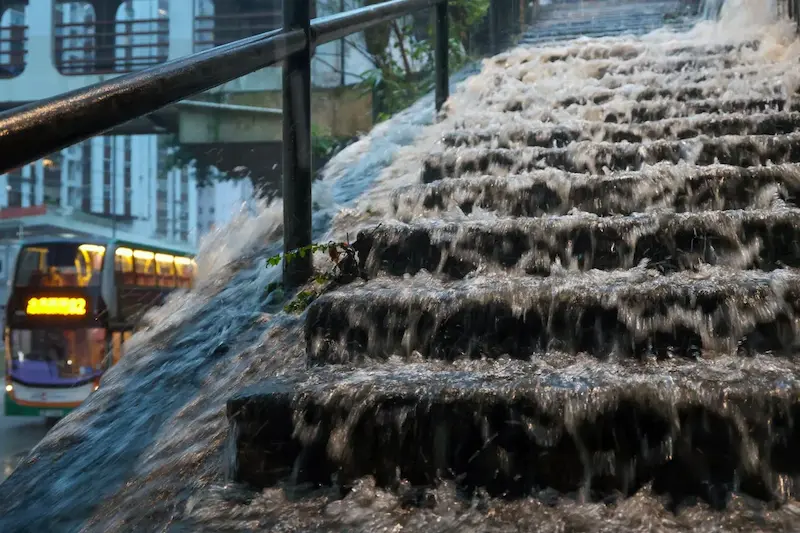


It started before the sun was up — the kind of rain that doesn’t just fall, it barrels in, like a wall of water crashing over the city. By the time the afternoon rolled around, over 350 millimeters had soaked central Hong Kong. That’s 14 inches in less than a day, smashing the city’s August rainfall record into muddy pieces.
You didn’t need a weather app to know something was off. Buses moved like they were wading through soup. Traffic lights blinked helplessly over intersections that looked more like shallow rivers. The airport, usually a picture of choreographed chaos, turned into a sea of delays and cancellations — over 430 flights held up, and a dozen scrapped altogether.
The black rain warning — Hong Kong’s loudest meteorological alarm bell — rang out again Tuesday morning. That makes it the fourth time in just one week. If that feels unusual, that’s because it is. The city’s weather agency had never before issued so many black signals in such a short span. This one lasted 12 straight hours.
And though the warning was lifted in the evening, the chaos didn’t simply vanish with it. You could see the effects across the city: metro exits closed, courts shuttered, the Gold Exchange suspended for the day. Over a dozen landslides were reported. One of them on Po Shan Road — a name that still echoes with the memory of the 1972 disaster when a slope collapse claimed 67 lives. The government has since reinforced its slope safety efforts, but even strong concrete and steel barriers can feel small when nature gets loud.
Jason Nicholls, a meteorologist with AccuWeather, suggested the worst had moved on to the northeast. Still, the ground beneath Hong Kong is telling a different story. “It’s not just one storm,” explained Stuart Millis, a geotechnical expert at Arup. “It’s the layering — black rain, red rain, black again. The soil can’t take it forever.”
He’s not wrong. Soil saturated by storm after storm loses its grip. Groundwater levels spike. Hillsides grow anxious.
What makes all of this even more dramatic is how dry the year started. The first half of 2025 barely saw any rain. Now, in a matter of weeks, the skies are making up for lost time — in torrents.
And it’s not just Hong Kong. Across the border in Shenzhen, a red alert was issued for the first time since 2018. Mainland cities like Beijing and Shanghai have faced their own nightmares — floods, destruction, even loss of life.
But there’s a certain resilience here — an almost stubborn routine that holds even when umbrellas flip inside out and sneakers are soaked through before breakfast. Ruchir Desai, a fund manager, shrugged it off. “I’ve been here 14 years. You learn to walk between the raindrops,” he said. “Market doesn’t wait for weather.”
That’s the strange rhythm of Hong Kong: a city where typhoons and IPOs can land on the same morning, where landslides might close a road but never close ambition. The rains may fall harder than they used to. The alerts may come more often. But somehow, the city keeps moving — soaked to the bone, but never washed away.