


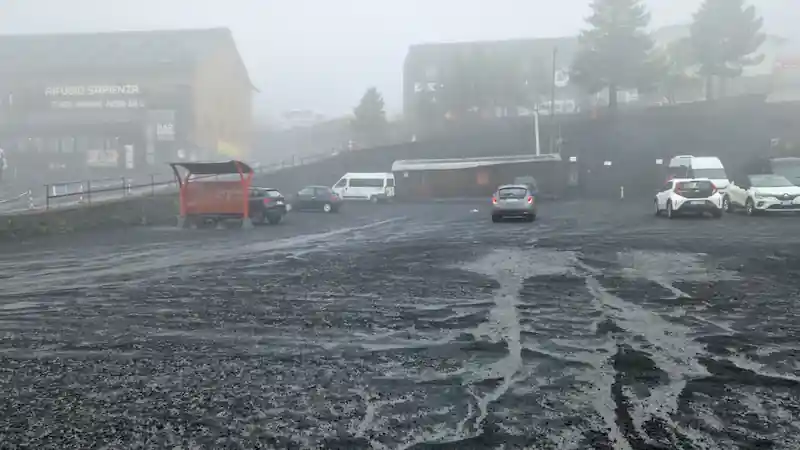


Sicily's Catania airport has suspended all flights until Monday 9 a.m. local time after ash from erupting Mount Etna covered the runways. Boris Behncke, a vulcanologist at the National Institute of Geophysics and Volcanology, that the ash was produced by a paroxysmal eruption that shot lava fountains more than 6.2 miles into the atmosphere.
The ash fall-out could pose serious threats to aviation, reducing visibility and damaging flight controls, causing engines to fail. The eruption threw black volcanic ash onto planes at the airport, while roads surrounding the area have been blanketed with the ash.
According to the observatory, the eruption phase has ended, but another phase could begin at any time. Volcanic ash clouds also pose a danger to aviation, as demonstrated by the vast plume of ash that drifted across Europe from Iceland's Eyjafjallajökull volcano eruption in 2010, causing the cancellation of thousands of flights.
Mount Etna, which is Europe's highest at almost 11,000 ft tall, is one of Sicily's most popular tourist attractions. The constant lava flows create a landscape that is ever-changing as craters collapse and new ones form. Hikers can trek up the volcano, while others can take a cable car to the 2,800-meter mark and board a 4x4 bus.
In 2017 a group of tourists and a BBC camera crew were forced to make a dramatic escape during an eruption, sprinting to a nearby rescue vehicle surrounded by steam and with boiling hot rocks falling around them. While ten people were reported to have been injured during that eruption, none suffered from serious injuries. Sicily remains on alert due to the latest incident, and those due to travel from or to Catania airport are advised to check with their airline before heading to the airport.