


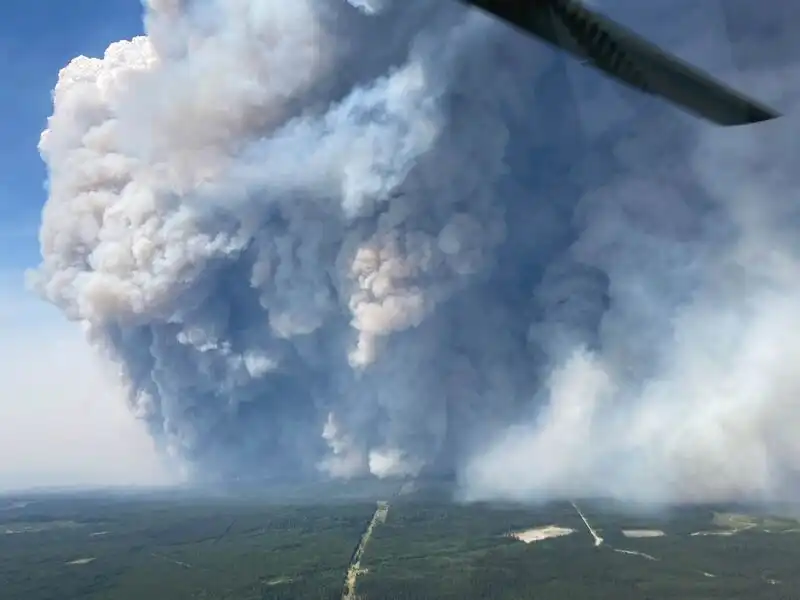


Smoke from ongoing Canadian wildfires has caused a pollution cloud to envelop the upper Midwest region of the United States, with air quality dropping to unhealthy levels in parts of Minnesota and North Dakota. However, the East Coast, particularly in and around New York City, has remained relatively unaffected with mostly good air quality, although there are some moderately polluted areas near Yonkers and across the river in New Jersey. The plume of smoke has now drifted over the North Atlantic and looks set to reach Greenland, Iceland, and the UK.
AirNow.gov, a US government website, reports that a large area from Minneapolis-St. Paul to Chicago's suburbs is experiencing moderate levels of air pollution, while Minnesota and eastern North Dakota are seeing unhealthy levels. The National Weather Service has issued air quality alerts across much of Minnesota until 6 am Thursday, with people with health conditions such as lung diseases, heart ailments, children, and the elderly urged to avoid heavy exertion.
According to the Canadian Interagency Forest Fire Centre, as of 13 June, there were 461 fires burning across Canada, with 236 raging out of control, contributing to the widespread smoke. The situation in Canada, combined with recent heatwaves and dry conditions, has created 'extreme' risk conditions in some areas for forest fires.
The air pollution is a reminder of the ongoing climate crisis and the need for action to reduce greenhouse gas emissions and prevent more devastating wildfires in the future. The Canadian blazes alone have so far burned over 1 million hectares of land and destroyed over 200 homes and buildings.
In the meantime, people in affected areas are being urged to take precautions, such as avoiding outdoor activities that require heavy exertion and keeping windows closed when indoors to reduce exposure to the smoky air. These measures can help to minimize the health risks and protect vulnerable groups, ultimately saving lives.